
THERMAL INSULATION MARINE INDUSTRY
THERMAL INSULATION MARINE INDUSTRY
In the marine sector, thermal insulation contributes to improving onboard comfort, reducing condensation, and limiting heat loss—without compromising interior living spaces. MARIS TECH provides low-thickness thermal insulation for the marine industry, applied by spray in an indicative thickness of 1–4 mm. It forms a continuous, seamless coating capable of adapting to the complex geometries of yachts, boats, ferries, and commercial vessels. It helps limit heat loss and condensation formation while preserving valuable interior space.
The product is MED-certified for marine applications according to SOLAS, IMO, and MSC standards.
Application thickness: 1–4 mm
Application method: Airless spray
Target vessels: Yachts, boats, ferries, and commercial ships
Certifications: MED–SOLAS–IMO–MSC No. 0497/1809
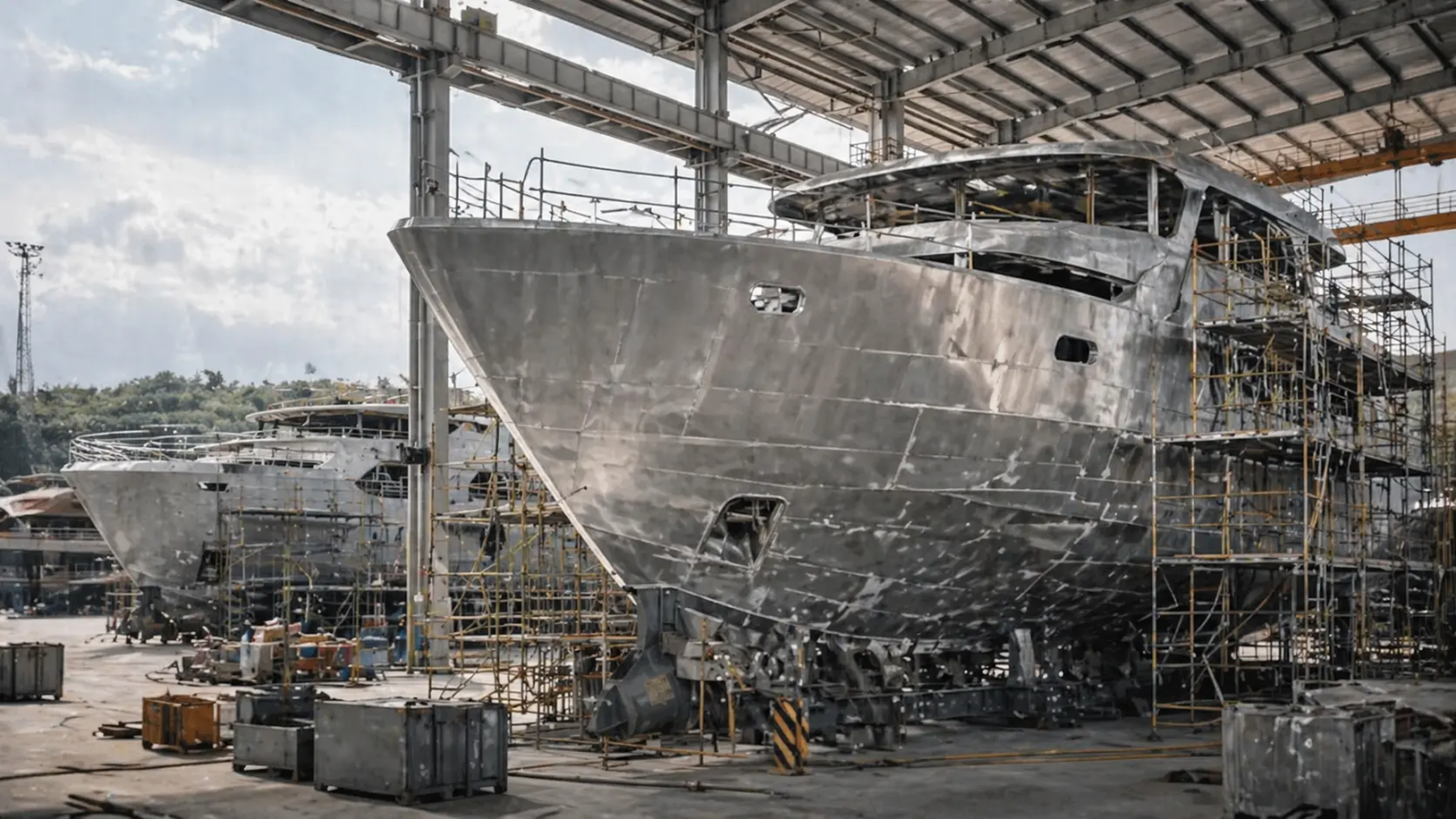
Shipyard with a metal-hull vessel under construction that may require low-thickness thermal insulation for marine applications.
On boats and vessels, thermal insulation affects not only comfort but also the quality and durability of interior environments.
Proper surface protection can help to:
In marine applications, available space is often limited and geometries are complex. For this reason, low-thickness insulation systems represent a particularly interesting solution.
MARIS TECH is a water-based nanocomposite thermal coating formulated with hollow ceramic microspheres. Sprayed directly onto the vessel’s internal surfaces, it creates a thin, uniform, and seamless layer that easily conforms to curves, stiffeners, joints, and intricate structural shapes.
Its insulating action helps reduce thermal transfer across surfaces and regulates surface temperature, thereby limiting the risk of condensation formation. The heat-reflective properties of the coating also work to enhance indoor comfort and reduce the energy load required for air conditioning and heating.
Thanks to its spray application and low thickness—typically between 1 and 4 mm—MARIS TECH allows for the treatment of areas where traditional panels and blankets would require extensive cutting, fitting, and adjustment. This makes it an ideal low-thickness thermal insulation marine industry solution for hulls, cabins, technical spaces, engine rooms, and refit projects.
MARIS TECH is designed to meet the specific needs of the marine sector, where designers and shipyards understand how important it is to use high-performance yet minimally invasive materials.

Thanks to these characteristics, MARIS TECH can be an excellent option when effective thermal insulation is required without resorting to bulkier traditional systems.
| Category / Feature | Maris Tech | Traditional Insulation (rockwoll, polyurethane foam etc) |
|---|---|---|
| Thickness | ✓ Reduced thickness (1-4 mm) Optimizes thermal performance in just a few millimeters (thermal insulation marine industry low thickness), preserving living space. | ✗ Large footprint Typically requires between 3 and 8 cm to ensure adequate performance, reducing interior volumes. |
| Condensation Prevention | ✓ High anti-condensation efficacy Adheres seamlessly to the surface, reducing air gaps and limiting the dew point phenomenon. | ✗ Risk of air gaps Panel rigidity facilitates the creation of void spaces where vapor tends to condense. |
| Water Behavior | ✓ High water repellency Resists moisture absorption, preventing the growth of mold and microorganisms. | ✗ Moisture sensitivity Various conventional materials can retain water, compromising insulating power over time. |
| Application Adaptability | ✓ Very flexibleand fast spray application Easily conforms to complex geometries, frames, welds, and shaped bulkheads. | ✗ Complex installation Rigid panels require intricate cutting and shaping to adapt to the curved lines of the hull. |
| Thermal Bridges | ✓ Structural continuity Forms a uniform layer that significantly reduces thermal dissipation points. | ✗ Presence of joints Contact points between individual panels create a pathway for heat and cold transfer. |
| Impact on Weight | ✓ Reduced weight impact Adds an extremely low load, preserving the vessel's trim and balance. | ✗ Significant weight Multilayer systems and their associated adhesives add substantial weight high up in the structure. |
| Durability Over Time | ✓ High durability Engineered to withstand marine environments, salt spray, and continuous mechanical stress. | ✗ Prone to degradation The combined action of moisture and continuous vibrations can cause flaking or detachment. |
| Safety and Comfort | ✓ Safe formulation Does not release microfibers or dust into the indoor environment during or after application. | ~ Presence of microfibers Some traditional insulations require precautions during installation to avoid dust or fiber dispersion. |
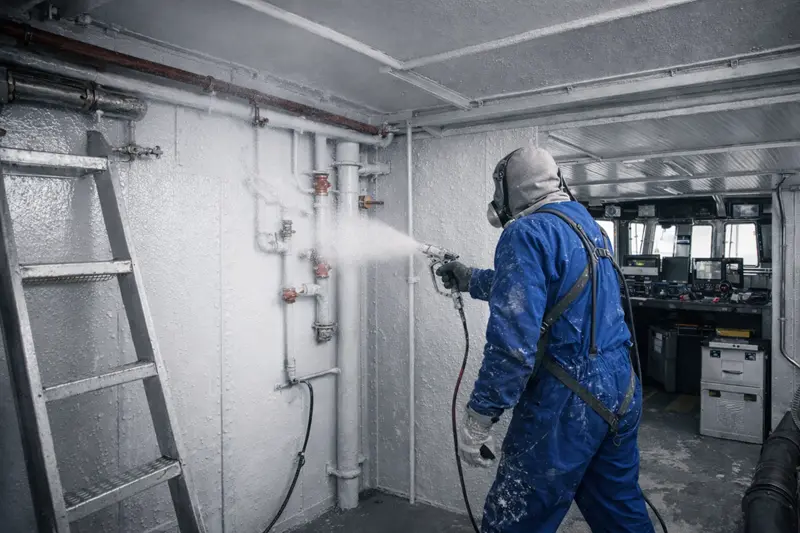
Spray application of MARIS TECH thermal insulation marine industry solution inside a vessel to improve thermal comfort, reduce condensation and optimize energy efficiency on board.
MARIS TECH can be considered for different areas of the vessel, especially where improving comfort and controlling condensation are important.
Using a low-thickness insulation solution such as MARIS TECH is especially advantageous when:
Ecco la traduzione completa in inglese, redatta con un registro tecnico, fluido e professionale, perfetto per la comunicazione B2B e B2C nel settore navale.
In the marine sector, every available centimeter counts.
For this reason, a low-thickness insulation system offers a concrete advantage over more bulky traditional solutions, especially when working in existing spaces or technical areas with limited access.
A solution of this type allows you to:
Easily preserve original structural geometries
Minimize the spatial footprint of the intervention
Treat surfaces that are difficult to cover with traditional panels or materials
Optimize installation in technical or hard-to-reach environments
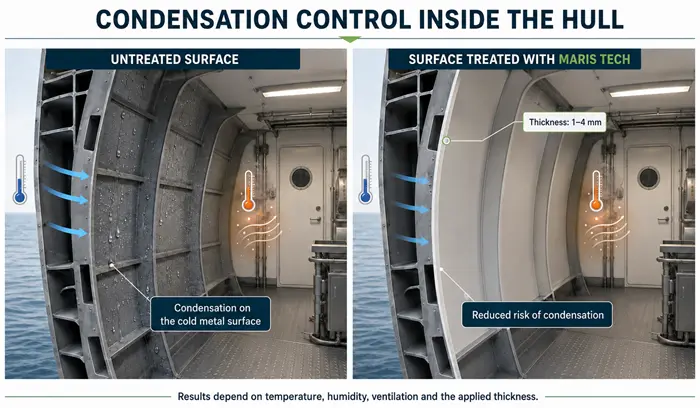
MARIS TECH forms a continuous 1–4 mm thermal coating that helps control surface temperature and reduce the risk of condensation inside metal hulls.
MARIS TECH forms a continuous 1–4 mm coating that helps control surface temperature and reduces the risk of condensation on the internal metal surfaces of the hull.
Anyone who lives or works on boats knows it well: condensation is one of the most insidious enemies in marine environments. Moisture, mold, unpleasant odors, and even the risk of structural corrosion are the direct consequence of thermal fluctuations between the inside and outside of the hull.
Traditional insulating materials (such as rock wool, rigid foam, or polystyrene) often show clear limitations in marine applications: they occupy valuable space, risk absorbing moisture over time, and require complex installations to fit the boat’s geometry perfectly.
This is where Maris Tech makes the difference.
When it comes to low-thickness thermal insulation for the marine industry, Maris Tech redefines onboard comfort and protection standards by addressing the condensation problem at its root.
Minimal thickness, maximum performance: Unlike conventional panels that steal precious space in living areas or technical compartments, Maris Tech delivers extraordinary effectiveness in a fraction of the space, preserving the vessel’s original interior volumes.
Continuous anti-condensation barrier: Condensation forms when water vapor meets a cold surface (the “dew point”). Maris Tech disrupts this thermal bridge without leaving air pockets or imperfect joints, preventing the formation of water droplets.
Zero water absorption: Many traditional insulation materials struggle in marine environments and end up soaking up water, losing their insulating power and promoting mold growth. Maris Tech is water-repellent and resistant to moisture.
Perfect adhesion to any geometry: Hulls, bulkheads, curves, and complex angles are difficult to cover with rigid panels. Maris Tech conforms seamlessly to the surface, eliminating the air pockets where moisture usually accumulates.
Lightweight and durable: Reducing weight aloft and onboard improves vessel performance. Maris Tech guarantees long-lasting insulation without weighing down the boat.
The result? Dry interior spaces, healthy air, absence of mold, and a comfortable microclimate in both summer and winter—without sacrificing onboard living space.
MARIS TECH was selected for the thermal insulation of the interior areas of a passenger ferry, where it was necessary to minimize space requirements and apply the coating onto complex surfaces. The product was spray-applied at a thickness of 3 mm, forming a uniform, continuous layer inside passenger lounges, cabins, and technical rooms.
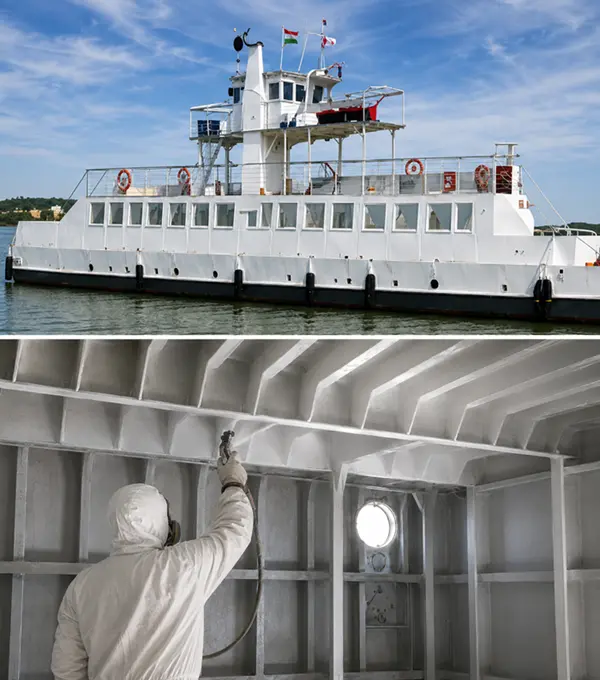
Video frame showing the spray application of a 3 mm MARIS TECH thermal coating on the internal metal surfaces of a passenger ferry.
| Project Details | Technical Data |
| Vessel Type | Passenger Ferry |
| Treated Areas | Lounges, cabins, and technical rooms |
| Applied Thickness | 3 mm |
| Application Method | Airless spray application |
| Design Requirements | Thermal insulation, condensation control, and space minimization |
| Product Used | MARIS TECH, MED certified |
MARIS TECH is a water-based, nanocomposite thermal coating formulated with hollow ceramic microspheres, specifically developed for marine applications. It is spray-applied onto the internal surfaces of yachts, boats, ferries, and ships, forming a thin, uniform, and continuous layer.
MARIS TECH is typically applied at a thickness between 1 and 4 mm across multiple coats. The required thickness must be determined based on the substrate, operating temperatures, and the project’s thermal and thermo-hygrometric goals.
Yes. MARIS TECH holds MED certification for marine applications in compliance with SOLAS, IMO, and MSC standards, under Certificate No. 0497/1809. Full documentation can be requested from Savenergy.it.
MARIS TECH can be applied to the internal surfaces of the hull, cabins, lounges, technical compartments, cargo holds, ceilings, and engine rooms, subject to operating conditions and project specifications.
Yes. Spray application allows the coating to follow curves, stiffeners, welds, joints, and complex geometries seamlessly. This creates a continuous layer, even in areas where traditional panels and blankets would require extensive cutting and fitting.
Yes. The coating helps control the surface temperature of metal bulkheads, thereby reducing the risk of reaching the dew point. However, performance also depends on temperature, humidity, ventilation, substrate properties, and applied thickness.
Yes. Its low thickness and spray application make MARIS TECH particularly suitable for yacht and boat refits, especially when preserving interior space and insulating hard-to-reach areas is a priority.
The choice depends on the thermal, acoustic, and fire protection performance required by the project. MARIS TECH can be used as an alternative or complementary solution when minimal thickness, coating continuity, and the ability to treat complex geometries are prioritized.
The product is mixed and applied in multiple coats using a suitable Airless pump. Installation time is significantly faster than that of traditional insulation panels.
No, no primer is required.
The indicative yield is approximately 1 liter per 1 m² to achieve a thickness of 0.75 mm. Actual consumption may vary depending on substrate roughness, application overspray, and the final required thickness.
Yes. Savenergy.it can carry out a preliminary evaluation considering the vessel type, surfaces to be treated, operating temperatures, thermo-hygrometric conditions, and project objectives.
Request a Technical Evaluation for Your Project
Would you like to find out whether MARIS TECH is suitable for your marine project?
Contact us for a preliminary evaluation: we will analyze the type of vessel, the areas to be treated, and the insulation, comfort, and condensation control requirements.
 Follow our facebook for video, case history and much more!
Technical content curated by Savenergy.it Srl
ISO 9001 certified company, active in energy efficiency since 2005 and in thermal insulation nanotechnologies since 2014.
Technical review: Eng. Elena Galeotti
Last updated: July 2026
Chatta con noi