Thermal Insulation for Modular Containers: The AES TECH Nanoceramic Solution

Thermal Insulation for Modular Containers: The AES TECH Nanoceramic Solution

Modular containers are increasingly used as offices, housing units, technical rooms, medical spaces and industrial facilities.
However, their steel structure presents a major challenge: high thermal conductivity.The thermal insulation for modular containers avoid overheat in summer, lose heat rapidly in winter, and often suffer from condensation problems.

This article explains how AES TECH nanoceramic coating provides an innovative and space-saving thermal insulation solution for modular containers.

Why Thermal Insulation Is Critical in Modular Containers

Steel has a high thermal conductivity (λ ≈ 50 W/m·K), which means:

  • Rapid heat gain under solar radiation
  • Significant heat loss in cold conditions
  • Surface condensation due to thermal bridges
  • Increased HVAC energy consumption
  • Reduced indoor comfort

Traditional insulation systems attempt to solve this by adding thick layers of insulating material. However, this approach often reduces internal usable space and increases installation complexity.

Traditional Insulation Methods for Containers

The most common insulation systems include:

1. Polyurethane (PU) Spray Foam

  • Good thermal resistance
  • Thick application required
  • Difficult to remove or modify

2. Mineral Wool Panels

  • Effective thermal barrier
  • Requires structural framing
  • Sensitive to moisture if not properly protected

3. EPS or Sandwich Panels

  • High insulation performance
  • Increased wall thickness
  • Reduced internal volume

While effective, these systems are bulk-based solutions that rely solely on low thermal conductivity materials.

How AES TECH Nanoceramic Coating Works

AES TECH is a nanotechnology-based thermal insulation coating designed to reduce heat transfer through metallic surfaces.

Unlike conventional insulation, AES TECH works through:

  • Low thermal conductivity
  • High solar reflectance
  • High infrared emissivity
  • Micro-ceramic structure that slows conductive heat flow

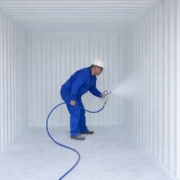
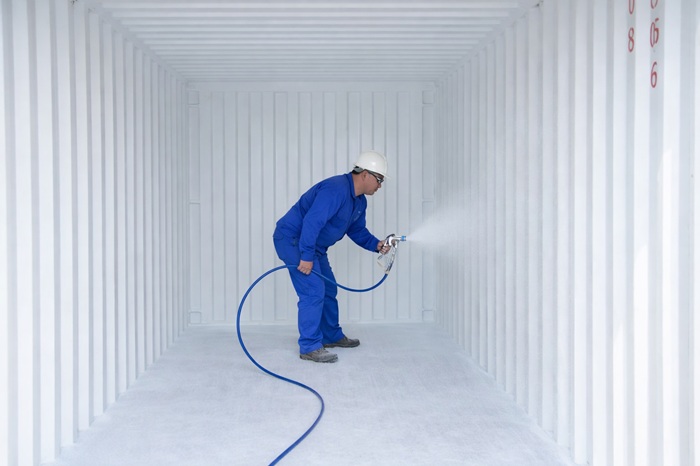
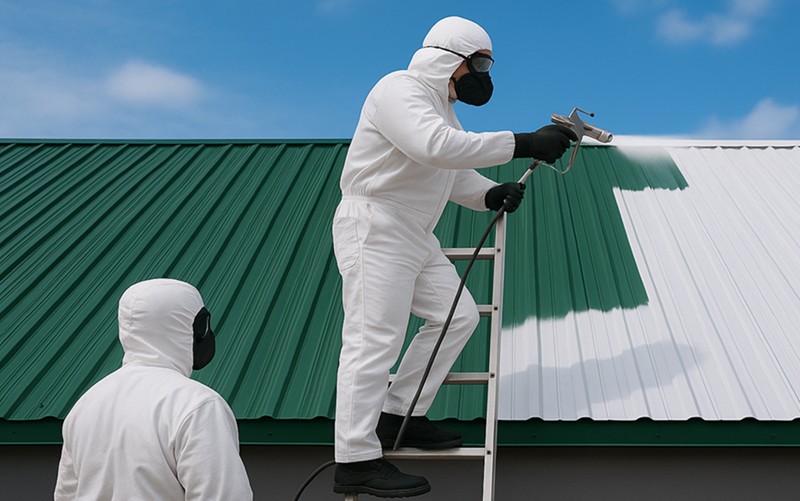
Applied directly onto steel surfaces using airless spray technology, AES TECH creates a continuous insulating membrane with minimal thickness (millimetric layer).

This makes it particularly suitable for modular containers, where space optimization is crucial.
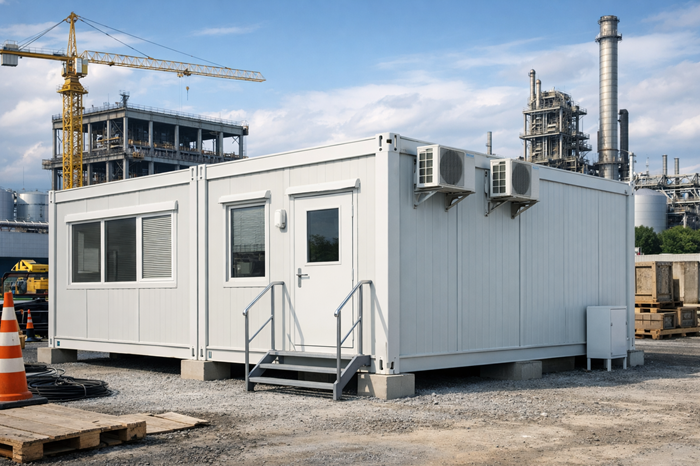
Thermal Insulation for Modular Containers

Benefits of AES TECH for Modular Containers

  1. Space-Saving Insulation

    AES TECH requires only a thin coating layer, preserving internal usable volume.

  2. Reduction of Heat Transfer

    The coating reduces thermal flux through steel panels, improving indoor temperature stability.

  3. Condensation ControlBy increasing internal surface temperature uniformity, AES TECH helps prevent dew point formation and moisture issues.
  4. Energy Efficiency

Lower heat gain and reduced heat loss translate into:

  • Reduced cooling demand in summer
  • Lower heating requirements in winter
  • Improved energy performance of the unit
  1. Easy Application

  • Direct application on existing containers
  • Suitable for retrofit and new constructions
  • No structural modification required

Thermal Performance Considerations regarding thermal insulation for modular containers

The effectiveness of AES TECH in modular containers depends on:

  • External climate conditions
  • Solar radiation exposure
  • Internal HVAC system
  • Total applied thickness

Typical Applications in Modular Containers

AES TECH is suitable for:

  • Modular office units
  • Temporary housing containers
  • Site cabins
  • Medical modular units
  • Industrial control rooms
  • Storage containers requiring thermal stabilization

It can also be integrated with traditional insulation systems for hybrid high-performance solutions.

AES TECH vs Traditional Insulation

Feature Traditional Insulation AES TECH
Thickness High (cm range) Very low 1-4 mm range
Space reduction Significant Minimal
Retrofit application Complex Easy
Weight increase High Low
Condensation control Indirect Direct surface effect

AES TECH is not simply an alternative — it is a performance-enhancing solution for steel-based modular structures.

Conclusion

Modular containers offer flexibility and rapid deployment, but their steel structure requires effective thermal management.

AES TECH nanoceramic coating provides:

  • Improved thermal insulation

  • Reduced energy consumption

  • Enhanced comfort

  • Space optimization

  • Simplified installation

  • Fireproof and atoxic

For companies and designers seeking efficient and innovative insulation solutions for modular buildings, AES TECH represents a technologically advanced option.

👉 For technical information or project evaluation, contact us at info@savenergy.it

Follow our facebook: Thermal micro-coating
Insulation and Waterproofing of Warehouse Roofs with a Single Product: Technological M

Technological M: Thermal insulation and waterproofing for warehouse roofs in one solution

What This Article Covers

Thermal insulation and waterproofing of warehouse roofs can now be achieved with a single nanotechnological product. Technological M improves the thermal efficiency of industrial roofs while providing continuous, durable protection against water and atmospheric agents.

Contents Index

  • Critical issues of industrial roofs
  • Why integrate thermal insulation and waterproofing
  • What is Technological M
  • Insulation waterproofing warehouse roofs: the dual benefit
  • Technical advantages for professionals
  • Surfaces and application contexts
  • Conclusions and call to action

Critical Issues of Industrial Warehouse Roofs

Industrial warehouse roofs are constantly exposed to solar radiation, temperature fluctuations, rain, humidity and atmospheric pollutants. These conditions cause summer overheating, energy losses and premature surface degradation, leading to high maintenance and operating costs.

In this context, insulation waterproofing warehouse roofs becomes a strategic requirement to improve indoor comfort, reduce energy consumption and extend roof lifespan.

Why Integrate Thermal Insulation and Waterproofing

Traditional systems usually treat insulation and waterproofing as separate interventions, involving different materials, greater thicknesses and longer installation times. This increases construction complexity and multiplies critical points.

An integrated system allows:

  • continuous coating,
  • reduction of thermal bridges,
  • extremely low thickness,
  • higher long-term reliability,
  • fast application on existing roofs (spray application).

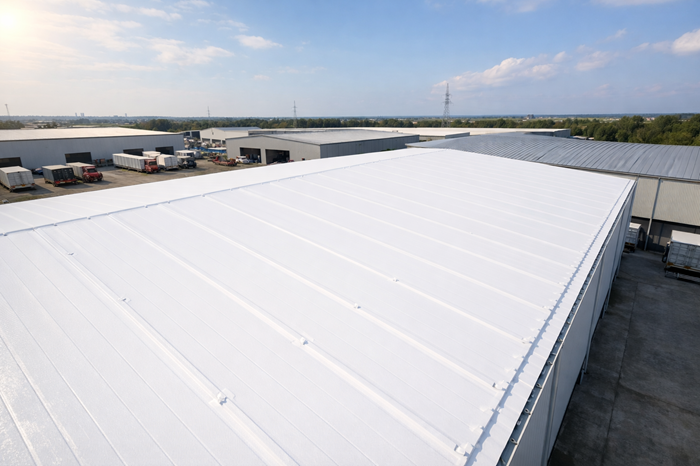
Technological M enables thermal insulation of industrial building roofs, at the same time,  allows surfaces to be waterproofed with a single product.

Thermal Insulation and Waterproofing of Warehouse Roofs with only one prodcut, the low-thickness microcoating Technological M

What Is Technological M, the product that allows Thermal Insulation and Waterproofing of Warehouse Roofs

Technological M is a water-based nanocomposite liquid thermal insulation and waterproofing coating. It is formulated with vacuum ceramic microspheres that act as a reflective thermal barrier and a continuous protective layer.

Applied by airless spray, it creates a uniform coating only a few millimeters thick, perfectly adhering to the substrate without adding structural load. It can be finished in different colors.

Thermal Insulation and Waterproofing of Warehouse Roofs: The Dual Benefit

The main advantage of Technological M is its ability to combine thermal insulation and warehouse roofs waterproofing in one solution.

From a thermal perspective, the coating significantly reduces incoming heat flow, limiting metal roof overheating and improving indoor temperature stability.
From a protective standpoint, the continuous layer prevents water infiltration, ponding and substrate degradation, preserving roof performance over time.

Technical Advantages for Professionals

For designers, contractors and facility managers, Technological M offers:

  • extremely low thickness and lightweight,
  • fast application without stopping production,
  • seamless coating without joints,
  • reduced energy and maintenance costs,
  • eco-friendly, fire-resistant and durable material.

These features make Technological M particularly suitable for industrial applications, where efficiency and downtime reduction are critical.

Surfaces and Application Contexts

Technological M is suitable for industrial and agricultural roofs made of:

  • metal sheets,
  • concrete,
  • fiber cement,
  • mixed or irregular surfaces.

It is ideal for both new constructions and energy retrofitting of existing warehouses.

Conclusions

Integrating thermal insulation and waterproofing into a single system is now an advanced technical choice. Thermal Insulation and warehouse roofs waterproofing with Technological M improves industrial and agricultural building performance through a fast, effective and long-lasting solution.

👉 For technical information or project evaluation, contact us at info@savenergy.it

Follow our facebook: Thermal micro-coating
Case History: Passenger Vessel Thermal Insulation During Refitting

Thermal protection for the bow cabin with nanotechnology


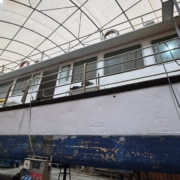
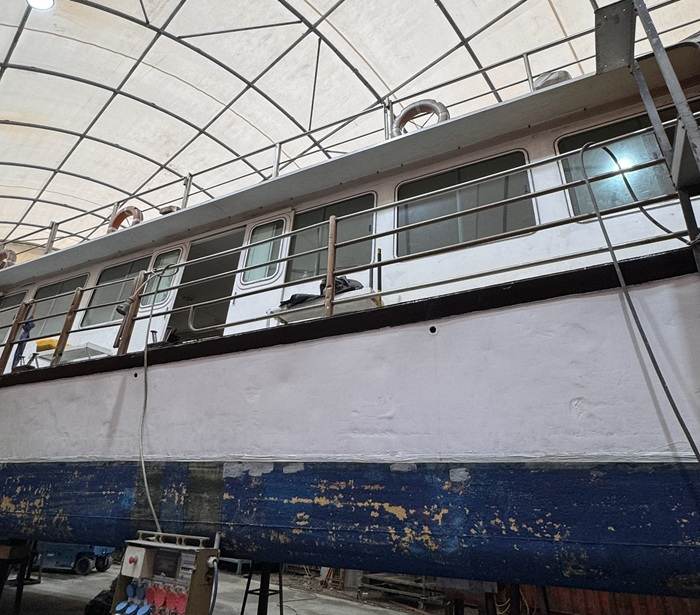
Passenger vessel thermal insulation with 2 mm of Maris Tech, with fast spray application

This article presents a real case history in the marine sector: during the refitting of a tourist passenger boat, MARIS TECH—a nanotechnology-based thermal coating—was applied to the bow cabin to solve heat and condensation issues. The intervention achieved excellent results with just 2 mm of thickness, confirming the effectiveness and durability of this passenger vessel thermal insulation solution.

What you’ll learn

  • Context: Refitting of a passenger vessel used for tourism
  • Problem: Overheating and condensation in the bow cabin
  • Solution: Application of MARIS TECH, a nanotech-based thermal insulator
  • Application method: Airless spray, applied in multiple coats
  • Thickness: 2 mm in this application (from 1 to 4 mm in general)
  • Results:
    • Improved thermal comfort
    • No condensation
    • Zero impact on internal space
    • No maintenance needed
    • Fireproof, non-toxic, MED certified
    • Fast and clean application

Passenger vessel thermal insulation with MARIS TECH

In the marine industry, ensuring energy efficiency and comfort—especially during refitting operations—is essential. This case history describes the application of MARIS TECH, a thin-layer thermal coating, to the interior of a passenger vessel bow cabin. The goal was to address both excessive heat and condensation without compromising onboard space.

Thanks to the high-performance passenger vessel thermal insulation provided by MARIS TECH the dual challenge was resolved . The product was sprayed using airless equipment, forming a durable and highly adhesive coating on metal surfaces, with just 2 mm of thickness.

Benefits for shipyards and designers (with Passenger Vessel or yatch etc. Thermal Insulation with Maris Tech)

MARIS TECH, one of the product of the range of industrial thermal insulation,  offers key advantages for marine professionals:

  • Efficient thermal insulation for all types of boats, including passenger vessels
  • Extremely thin application: 1–2 mm
  • Fire-resistant, non-toxic, environmentally friendly (MED certified)
  • Perfect adhesion on metal and complex surfaces
  • No structural changes required
  • Long-lasting performance without maintenance
  • Quick airless spray application

This project demonstrates how innovation, comfort, and sustainability can come together to solve technical challenges simply and efficiently.

Want to know more?

📧 Contact us at info@savenergy.it for technical information or a custom consultation for your marine project.

📹 Follow our facebook for other case histories and much more!

Thermal Plant Pipe Insulation: The Case of a Residential Building in Milan

Case Study: Thermal insulation of central heating system pipes with AES TECH

An effective solution to improve energy efficiency

What you will read In this article, you will find useful information about thermal plant pipe insulation. In the heart of Milan, a central thermal plant serving a residential building has recently undergone a significant energy requalification through the application of the nanotechnology-based coating AES TECH. This case study highlights how the thermal plant pipe insulation using high-performance, low-thickness products can drastically improve energy efficiency, reduce thermal loss, and simplify maintenance operations.

SUMMARY

✅ Context of the intervention: initial challenges and motivation

✅ Why choose AES TECH: technical features and product benefits

✅ Application phases: preparation, spray application, curing

✅ Results achieved: enhanced insulation, safety, and reduced maintenance

✅ Conclusions: a replicable model for both residential and industrial systems

In the context of plant requalification projects, the thermal plant pipe insulation is a strategic action to reduce energy dispersion and improve overall system performance. In this specific case, AES TECH was used to insulate the pipes of a residential heating system. The outcome was remarkable: enhanced thermal insulation with minimal space occupancy and no need for invasive construction work.

Why insulate heating system pipes?

Generally speaking, in centralized heating systems, pipes are one of the primary sources of heat loss, especially when outdated or insufficient insulation materials are used. Consequently, poor insulation leads to increased energy consumption to maintain proper supply and return temperatures, ultimately resulting in higher energy bills for residents.

Fortunately, using nanotechnology-based materials such as AES TECH for thermal plant pipe insulation drastically reduces these losses. Indeed, this is made possible by the product’s high reflectivity and controlled emissivity.

AES TECH: performance and specifications

AES TECH is a semi-liquid nanocomposite thermal coating designed for industrial applications. Notably, thanks to its hollow ceramic nanospheres and patented binder, it ensures exceptional insulation performance at a thickness of only 1 to 4 mm:

  • Thermal conductivity λ = 0.0010 W/mK
  • Thermal reflectivity: 91%
  • Fire reaction rating: Euroclass A1
  • Spray application with Airless pump
  • Water-based, solvent-free, VOC-free

Therefore, its thin-layer profile makes it ideal for technical rooms and limited-space applications.

Case execution: thermal plant pipe insulation with AES TECH

The intervention was carried out in two stages:

  1. Cleaning of the metal piping;
  2. Two spray coats of AES TECH with an Airless system.


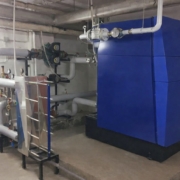
thermal plant pipe insulation with the low thickness AES TECH coating

Key benefits achieved:

  • Immediate reduction of heat loss in both supply and return lines;
  • Increased safety due to the fire-resistant nature of the product;
  • Elimination of thermal bridges without increasing volume;
  • Long-term durability with zero maintenance, thanks to excellent adhesion and material stability.

A replicable and sustainable solution of thermal plant pipe insulation

In conclusion, this project shows that thermal plant pipe insulation with AES TECH is not only effective but also quick, sustainable, and cost-efficient. Consequently, it can be easily replicated in other residential and industrial settings, supporting the broader goal of energy transition in building infrastructures.

🔵 For more technical details or a personalized consultation, contact us at info@savenergy.it

📹 Follow our facebook for video, case history and much more!

Reduce energy consumption, protect your goods, and maximize interior space with high-performance, ultra-thin insulation coatings.

Thermal Insulation of Refrigerated Containers: the Nanotechnological Solution for an Efficient Cold Chain

Discover why the thermal insulation of refrigerated containers is a key factor in temperature-controlled logistics. We examine the limitations of traditional systems and present the benefits of cutting-edge nanotechnological coatings designed for high performance at minimal thickness.

📑 Contents

  • Why thermal insulation for refrigerated containers is essential
  • Weaknesses of traditional insulation systems
  • Features of advanced nanotechnological coatings
  • Operational and logistic benefits
  • Final thoughts and contact information

❄️ Why the thermal insulation of refrigerated containers is essential

In the transportation of food, pharmaceuticals, cosmetics, and sensitive goods, refrigerated containers must maintain consistent internal temperatures. Even with active refrigeration units, passive thermal insulation plays a critical role in:

  • Reducing energy consumption
  • Preventing thermal shock and external temperature fluctuations
  • Minimizing internal condensation
  • Extending autonomy during breakdowns
  • Protecting cargo and enhancing sustainability

⚠️ The limitations of traditional insulation for refrigerated containers

Conventional materials like polyurethane foam present several issues when used for thermal insulation refrigerated containers:

  • Bulky thickness that reduces usable interior volume
  • Limited effectiveness against radiant heat
  • Moisture absorption and potential for mold growth
  • Difficult application in retrofit projects
  • Fire safety and toxicity concerns

For these reasons, many companies are now switching to modern, high-performance alternatives.

thermal insulation of refrigerated containers with low thickness AES TECH insulation, spray-applied

🚀 Advanced features of nanotechnological coatings for refrigerated containers

Latest-generation nanotech coatings, such as Technological M and AES Tech, offer an innovative approach to thermal insulation of refrigerated containers, thanks to their shared advanced characteristics:

  • Extremely high solar reflectance (SRI > 111): repels solar and infrared radiation
  • Ultra-low thermal conductivity (λ ≈ 0.0010 W/mK)
  • Minimal thickness: from 1 to 4 mm
  • Waterproof yet vapor permeable: prevents condensation and mold
  • Non-toxic, fireproof, eco-friendly, and low VOC
  • Spray-applied for easy and uniform coverage
  • Excellent adhesion to metal, plastic, PVC, concrete, and wood
  • Certified durability and minimal maintenance

These coatings are ideal for both new containers and retrofitted cold storage or temporary housing units.

📦 Concrete benefits for refrigerated container use

✅ Improved internal temperature stability
✅ Reduced strain on cooling units
✅ Energy savings and lower operational costs
✅ Easy and fast application, even in retrofit scenarios
✅ No loss of usable space
✅ Moisture and mold protection
✅ Long-lasting performance without degradation

Thermal insulation of refrigerated containers can now be achieved with just a few millimeters of spray-applied AES Tech.

📈 Ideal applications of thermal insualtion for refrigerated containers

Use Case Benefits
Refrigerated containers for food and pharma logistics Reliable cold chain maintenance
Containers converted into static cold rooms Quick retrofit, no structural work
Maritime and industrial environments Resistant to vibrations, humidity, and aggressive agents
Extreme climates High solar reflectance and stable thermal protection

✅ Conclusions

Thermal insulation of refrigerated containers is now a challenge that requires smart, high-performance technologies. With nanotechnological coatings at ultra-low thickness, you can achieve high-efficiency insulation that’s eco-friendly, space-saving, and easy to apply—without altering the structure or reducing the internal capacity of the container.

📩 Want to find the best solution for your refrigerated containers?
Contact us at: info@savenergy.it

For Technological M visit also https://www.manticeramicitalia.it/en/industry/

Food Sector Tanks: How to Ensure Effective and Safe Thermal Insulation

Food Sector Tanks: How to Ensure Effective and Safe Thermal Insulation Thermal insulation tanks in food sector: hygiene, efficiency, and long-term performance The thermal insulation of tanks in the food sector requires hygienic, efficient, and safe solutions. AES Tech and Technological M offer a durable, non-toxic, and ultra-thin alternative to traditional systems. 📌 What you’ll […]

Cosmetic reactor insulated with nanotechnology: efficiency and safety with the industrial insulation in chemical sector

Nanotechnological industrial insulation applied to a reactor in the chemical sector for cosmetic production. Improved thermal efficiency, reduced energy consumption and fast application with minimal thickness.

Table of contents

  • What is a cosmetic reactor
  • The challenge of insulation in the chemical sector
  • The solution: nanotechnological coating
  • Benefits achieved
  • Conclusions and contacts

What is a cosmetic reactor

In the cosmetic industry, the chemical reactor is a key piece of equipment used to mix, heat or cool raw materials involved in the formulation of creams, lotions, shampoos and other cosmetic products. These reactors are typically made of stainless steel and equipped with mechanical agitators, heating or cooling coils, and advanced temperature control systems.

Maintaining a stable and precisely controlled temperature is essential to ensure product quality, process repeatability and overall production efficiency. This is why industrial thermal insulation solutions in chemical sector play a crucial role in cosmetic manufacturing environments.

The challenge of industrial insulation in the chemical sector

In this context, industrial insulation chemical sector applications become strategically important. Reactors often operate at high temperatures, and thermal dispersion leads to increased energy consumption, safety risks for operators, and temperature fluctuations that can negatively affect product quality.

Traditional insulation systems such as mineral wool or polyurethane panels frequently show limitations in chemical environments. They may suffer from moisture absorption, degradation over time, or incompatibility with strict hygienic and sanitary requirements, which are common in the cosmetic industry.

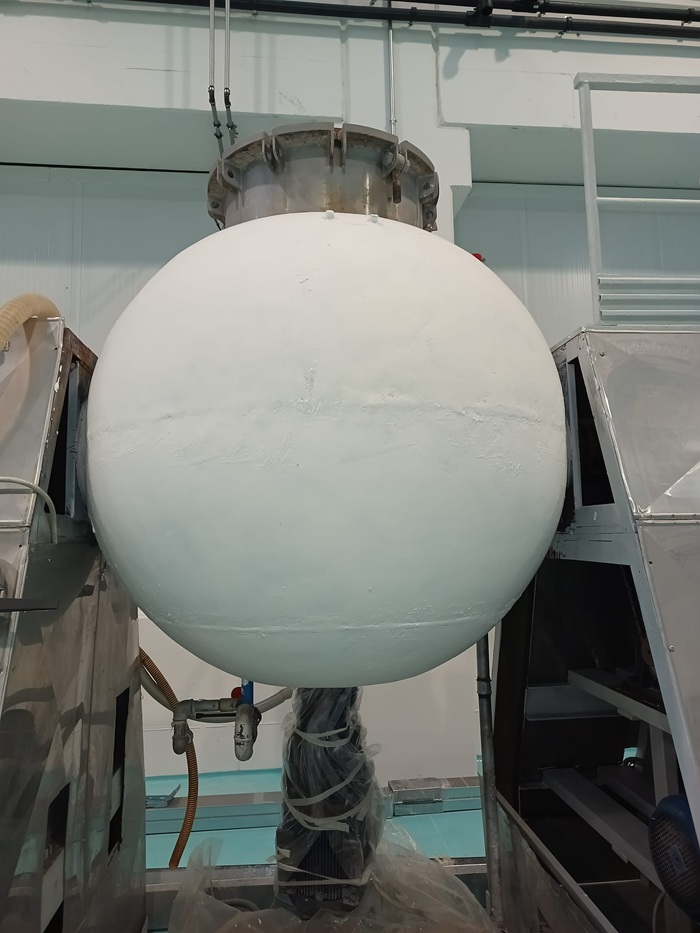
Industrial insulation of a reactor in the chemical (cosmetic) sector using 2 mm of AES TECH

industrial insulation in the chemical sector with microcoating AES TECH

For this specific project, Savenergy.it proposed the use of AES TECH, a water-based nanotechnological thermal insulation coating, solvent-free and composed of vacuum ceramic microspheres with high thermal reflectivity.

The product was applied directly onto the metal surface of the reactor, following proper surface preparation and primer application. Thanks to airless spray application, the insulation process was completed without dismantling or modifying the reactor structure.

The applied thickness of only 2 mm provided thermal performance equivalent to several centimeters of traditional insulation materials, with no impact on space, accessibility or machine operation. This makes AES TECH an ideal solution for industrial insulation chemical sector applications where space and efficiency are critical.

Benefits achieved with industrial insulation in chemical sector

The industrial thermal insulation in chemical sector intervention carried out using AES TECH delivered significant operational and management advantages for the cosmetic manufacturer:

  • Energy consumption reduction up to 30%, thanks to very low thermal conductivity (λ down to 0.0010 W/mK)
  • Consistent thermal stability, with reduced temperature variations between production batches
  • Improved operator safety, due to lower surface temperatures
  • No maintenance required, unlike traditional insulation systems
  • Fast application, even in humid industrial environments
  • Compliance with hygienic, environmental and safety regulations (non-toxic, fire-resistant, eco-friendly product)

Contacts

Industrial insulation in chemical sector projects require modern, high-performance and fast-to-apply solutions. The nanotechnological coating AES TECH has proven to be an effective and reliable choice for insulating high-efficiency equipment such as cosmetic reactors.

This successful case history confirms that our solutions are versatile, durable and sustainable, perfectly suited for demanding industrial environments.

📩 Contact us for more information:
👉 info@savenergy.it

Follow our facebook for video, case history and much more!

Thermal Coating Industrial Buildings: Energy Efficiency Starts Here

Smart Insulation for the Modern Industry

In today’s industrial environment, a thermal coating industrial buildings solution is a strategic choice to improve energy efficiency, reduce HVAC costs, and extend the lifespan of structures. Industrial buildings, warehouses, and workshops are often exposed to extreme temperature changes that strain materials, equipment, and working conditions.

To meet these challenges, Savenergy.it offers two high-performance nanotechnology-based solutions: Technological M and AES TECH. These coatings are designed to provide ultra-thin insulation that is easy to apply, long-lasting, and compatible with complex or existing surfaces.

thermal insulation for industrial buildings

Why Choose a Nanotechnology-Based Thermal Coating for Industrial Buildings

A thermal coating industrial buildings system based on nanotechnology is a step forward compared to traditional insulation methods. Thanks to the use of vacuum ceramic microspheres, these coatings act as true thermal shields: they block up to 85% of incoming thermal radiation, drastically reducing summer overheating and winter heat loss.

With just a few millimeters of thickness, they deliver performance comparable to several centimeters of conventional insulation. In addition, the application is fast via Airless spray technology, maintenance is minimal, and the coating provides excellent resistance to moisture, weather, and UV exposure.

Thermal Coating Industrial Buildings: Real Benefits for Industry

Both Technological M and AES TECH are ideal for metal roofs, concrete surfaces, wood or plastic elements, prefab panels, and both exterior and interior walls. The coating perfectly adapts to irregular geometries and ensures:

  • Better indoor thermal comfort

  • Reduced condensation

  • Long-term material protection

  • Immediate energy savings

Thanks to these features, a thermal coating industrial buildings application also becomes a sustainability investment, delivering measurable benefits for both the environment and operational costs.

Want to Learn More?

Contact us to receive expert advice on choosing between Technological M and AES TECH, depending on your facility’s specific needs.

📩 Write to us at for more information: info@savenergy.it