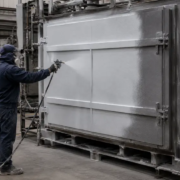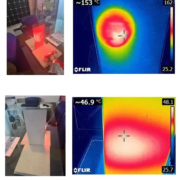
Reduce energy consumption, protect your goods, and maximize interior space with high-performance, ultra-thin insulation coatings.
Thermal Insulation of Refrigerated Containers: the Nanotechnological Solution for an Efficient Cold Chain
Discover why the thermal insulation of refrigerated containers is a key factor in temperature-controlled logistics. We examine the limitations of traditional systems and present the benefits of cutting-edge nanotechnological coatings designed for high performance at minimal thickness.
📑 Contents
- Why thermal insulation for refrigerated containers is essential
- Weaknesses of traditional insulation systems
- Features of advanced nanotechnological coatings
- Operational and logistic benefits
- Final thoughts and contact information
❄️ Why the thermal insulation of refrigerated containers is essential
In the transportation of food, pharmaceuticals, cosmetics, and sensitive goods, refrigerated containers must maintain consistent internal temperatures. Even with active refrigeration units, passive thermal insulation plays a critical role in:
- Reducing energy consumption
- Preventing thermal shock and external temperature fluctuations
- Minimizing internal condensation
- Extending autonomy during breakdowns
- Protecting cargo and enhancing sustainability
⚠️ The limitations of traditional insulation for refrigerated containers
Conventional materials like polyurethane foam present several issues when used for thermal insulation refrigerated containers:
- Bulky thickness that reduces usable interior volume
- Limited effectiveness against radiant heat
- Moisture absorption and potential for mold growth
- Difficult application in retrofit projects
- Fire safety and toxicity concerns
For these reasons, many companies are now switching to modern, high-performance alternatives.

🚀 Advanced features of nanotechnological coatings for refrigerated containers
Latest-generation nanotech coatings, such as Technological M and AES Tech, offer an innovative approach to thermal insulation of refrigerated containers, thanks to their shared advanced characteristics:
- Extremely high solar reflectance (SRI > 111): repels solar and infrared radiation
- Ultra-low thermal conductivity (λ ≈ 0.0010 W/mK)
- Minimal thickness: from 1 to 4 mm
- Waterproof yet vapor permeable: prevents condensation and mold
- Non-toxic, fireproof, eco-friendly, and low VOC
- Spray-applied for easy and uniform coverage
- Excellent adhesion to metal, plastic, PVC, concrete, and wood
- Certified durability and minimal maintenance
These coatings are ideal for both new containers and retrofitted cold storage or temporary housing units.
📦 Concrete benefits for refrigerated container use
✅ Improved internal temperature stability
✅ Reduced strain on cooling units
✅ Energy savings and lower operational costs
✅ Easy and fast application, even in retrofit scenarios
✅ No loss of usable space
✅ Moisture and mold protection
✅ Long-lasting performance without degradation
Thermal insulation of refrigerated containers can now be achieved with just a few millimeters of spray-applied AES Tech.
📈 Ideal applications of thermal insualtion for refrigerated containers
| Use Case | Benefits |
|---|---|
| Refrigerated containers for food and pharma logistics | Reliable cold chain maintenance |
| Containers converted into static cold rooms | Quick retrofit, no structural work |
| Maritime and industrial environments | Resistant to vibrations, humidity, and aggressive agents |
| Extreme climates | High solar reflectance and stable thermal protection |
✅ Conclusions
Thermal insulation of refrigerated containers is now a challenge that requires smart, high-performance technologies. With nanotechnological coatings at ultra-low thickness, you can achieve high-efficiency insulation that’s eco-friendly, space-saving, and easy to apply—without altering the structure or reducing the internal capacity of the container.
📩 Want to find the best solution for your refrigerated containers?
Contact us at: info@savenergy.it
For Technological M visit also https://www.manticeramicitalia.it/en/industry/