Insulation for Industrial Buildings: how to improve comfort, protection and condensation control with AES TECH and Technological M
Insulation for Industrial Buildings: how to improve comfort, protection and condensation control with AES TECH and Technological M
What you will read: Insulation for industrial buildings is essential when the goal is not only to reduce heat gain and heat loss, but also to improve indoor comfort, limit condensation and protect goods, equipment and metal surfaces. In industrial sheds, warehouses, hangars and agricultural buildings, roofs and walls are often the most exposed elements. With AES TECH and Technological M, we can intervene with very low thicknesses, adapting the solution to roofs, walls and technical surfaces according to the specific needs of the building.
By Eng. Elena Galeotti
What you will find in this article
- Why insulation for industrial buildings is now a strategic issue
- The most common problems affecting roofs and walls
- The main differences between AES TECH and Technological M
- Typical application scenarios in industrial and agricultural buildings
- Why low-thickness insulation can be a practical advantage
- FAQ
Why insulation for industrial buildings matters today
When we talk about insulation for industrial buildings, the discussion often focuses only on energy saving. In reality, the topic is much broader. In industrial, logistics and agricultural environments, an inefficient envelope can create overheating, cold internal surfaces, condensation and unstable indoor conditions.
This directly affects:
- worker comfort
- the preservation of goods and packaging
- the durability of metal surfaces
- the efficiency of storage and production areas
- the continuity of operations
In industrial sheds, warehouses, hangars, livestock buildings and agricultural facilities, roofs and walls are continuously exposed to solar radiation, cold, humidity and sudden weather changes. That is why choosing the right solution for insulation for industrial buildings is not just a technical detail, but a practical decision that can affect the daily use of the building.
The most common problems in industrial roofs and walls
1. Overheating in summer
Metal roofs can absorb a high amount of solar radiation and transfer heat indoors. This can increase discomfort and put additional stress on cooling systems.
2. Cold surfaces and condensation
In winter or during seasonal transitions, poorly insulated walls and roofs can cool down quickly. This may create surface condensation, especially where indoor and outdoor temperatures differ significantly.
3. Damage to goods and technical components
Condensation and thermal fluctuations can affect:
- paper and cardboard packaging
- raw materials and semi-finished products
- sensitive equipment
- metal elements exposed to corrosion risks
4. Difficult interventions on existing buildings
Many industrial buildings require fast and low-impact solutions, especially when production or storage activities cannot stop for long.
Our approach to insulation for industrial buildings
At Savenergy, we work with nanotechnological thermal insulation systems designed for industrial applications where low thickness, versatility and practical installation are essential.
Our range includes:
- AES TECH, with an application thickness of approximately 1 to 4 mm
- Technological M, with an application thickness of approximately 0.6 to 2 mm
Both solutions are designed for very low-thickness applications, but they are not identical. Each product has strengths that make it more suitable in specific cases.
Technical overview: AES TECH
What it is
AES TECH is a nanotechnological thermal coating developed for industrial applications, especially on metal and technical surfaces.
Indicative application thickness
- 1–4 mm
Best suited for
- metal walls
- tanks
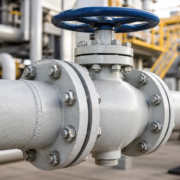
- pipes
- technical surfaces
- cold rooms
- industrial equipment
- critical internal points affected by thermal stress or condensation
- can be applied also on concrete, cement, wood, PVC etc.
Main strengths
- higher applicable thickness compared to Technological M
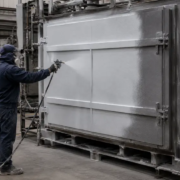
- easy airless application
- suitable for industrial metal surfaces
- useful where stronger insulation contribution is required
- low-thickness intervention on technically sensitive elements
When we usually recommend it for the Insulation for industrial buildings
We usually recommend AES TECH when the project focuses on metal walls, industrial components or localised areas where condensation, thermal fluctuation or heat transfer must be reduced without bulky build-ups.
Technical overview: Technological M
What it is
Technological M is a nanotechnological thermal and waterproofing coating particularly suitable for industrial and agricultural roofs and external surfaces.
Indicative application thickness
- 0.6–2 mm
Best suited for
- industrial roofs
- agricultural roofs
- external envelopes
- mixed substrates
- surfaces exposed to strong solar radiation
Applicable on
- metals
- concrete
- cement
- wood
- PVC
- plastics
- other heterogeneous substrates
Main strengths
- thermal protection combined with waterproofing effect
- very versatile on different substrates
- especially useful on roofs and exposed outer surfaces
- low-thickness solution for large surfaces
When we usually recommend it for the Insulation for industrial buildings
We usually recommend Technological M when the main issue concerns the roof, the outer envelope, summer overheating, waterproofing needs or the treatment of surfaces exposed to weather and solar radiation.
AES TECH and Technological M: quick comparison
AES TECH
- Thickness: 1–4 mm
- Focus: metal and technical surfaces
- Best for: walls, tanks, pipes, cold rooms, industrial elements
- Key advantage: greater applicable thickness where higher insulation contribution is needed
Technological M
- Thickness: 0.6–2 mm
- Focus: roofs and outer surfaces
- Best for: industrial sheds, agricultural buildings, external coverings
- Key advantage: thermal protection plus waterproofing on exposed surfaces
Main application scenarios of the Insulation for industrial buildings
1. Industrial sheds with sun-exposed metal roofing
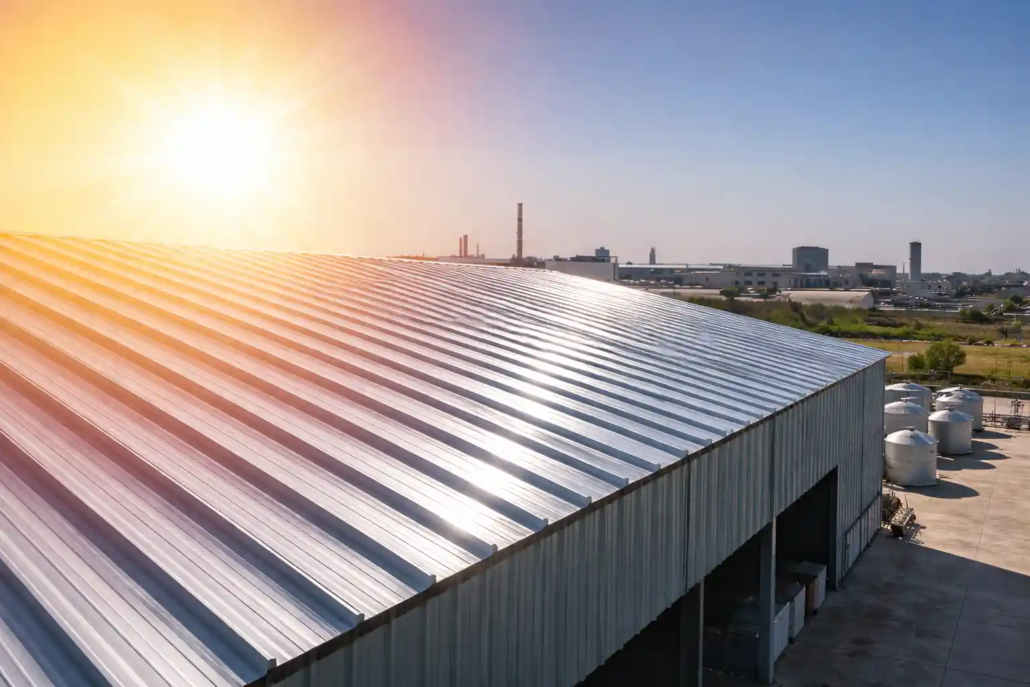
This is one of the most common cases. During summer, sheet-metal roofs can become a major source of indoor heat. In these situations, Technological M is particularly valuable because it works directly on the roof and also adds waterproofing protection.
2. Storage warehouses with sensitive goods
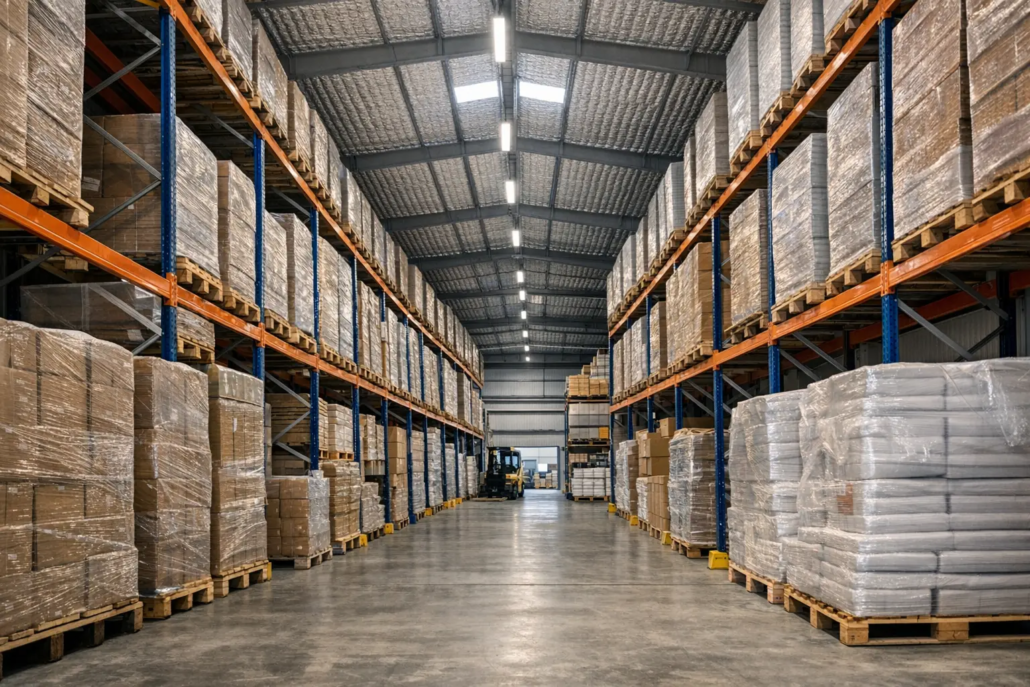
In warehouses, the issue is not only people’s comfort. Thermal peaks and condensation can damage packaging, components, raw materials and stored products. Here, insulation for industrial buildings becomes an operational necessity as well as a technical one.
3. Hangars and large-volume structures
In hangars or lightweight industrial buildings, very large internal volumes make indoor climate control more complex. If the roof overheats in summer or cools too quickly in winter, discomfort increases and HVAC systems work harder.
4. Livestock and agricultural buildings
In these environments, microclimate control is essential. Roof overheating may increase heat stress, while condensation can worsen indoor hygiene and environmental conditions. Technological M can be especially useful on roofs, while AES TECH can be considered for other critical metal elements.
5. Metal walls affected by condensation
When the main issue is a cold inner wall, AES TECH is often one of the most interesting options because it is particularly suitable for industrial metal surfaces and technical applications.
6. Mixed-substrate buildings
Not all industrial structures are uniform. Many include metal, wood, PVC or plastic components. In these cases, using low-thickness systems that adapt to different surfaces can be a major practical advantage.
7. Buildings that require fast, low-impact work
Where production cannot stop for long, airless spray application and reduced thickness can make the intervention more manageable and less invasive than traditional high-thickness systems.
A key advantage: low thickness and practical flexibility for the Insulation for industrial buildings
One of the most interesting aspects of our solutions is the balance between insulation performance and limited thickness.
This can be particularly useful when:
- the structure should not be overloaded
- internal volume must be preserved
- the building is already in use
- traditional insulation would be too invasive
- the intervention must adapt to complex surfaces
For industrial projects, low thickness is not only a technical value. It is often a practical advantage that can simplify the whole intervention.
How we choose between AES TECH and Technological M for the Insulation for industrial buildings
In general, we tend to highlight:
- Technological M when the main issue concerns the roof, the external envelope or waterproofing needs
- AES TECH when the intervention focuses on metal walls, technical surfaces, industrial equipment or areas where a greater thickness is needed
In many cases, the right approach is not to think in abstract terms about one product only, but to assess:
- the type of roof
- the type of wall
- the substrate
- the intended use of the building
- the main thermal and condensation-related critical points
Conclusions
Insulation for industrial buildings is no longer just a matter of reducing energy consumption. It is a decision that affects comfort, condensation control, protection of goods, surface durability and the day-to-day functionality of industrial and logistics spaces.
Industrial sheds, warehouses, hangars, depots and agricultural buildings all have different needs, but one principle remains the same: roofs and walls must be treated with solutions that fit the real materials, the real loads and the real critical issues of the building.
With AES TECH and Technological M, we can address these needs through a low-thickness, flexible and technically focused approach.
For more information or to evaluate the most suitable solution for your project, contact us at info@savenergy.it.
 Follow our facebook for video, case history and much more!
FAQ about Insulation for industrial buildings
Can AES TECH and Technological M both be used for insulation for industrial buildings?
Yes. Both are suitable for industrial applications, but with different areas of focus. Technological M is especially interesting for roofs and external surfaces, while AES TECH is particularly suitable for metal walls, technical surfaces and industrial elements that require greater thickness. Furthermore, the two products can also be used in combination, for example by insulating a roof with 2 mm of AES TECH plus 1 mm of Technological M.
Do these products help reduce condensation?
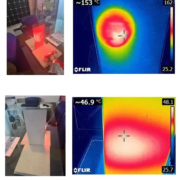
Yes. By improving the thermal behaviour of roofs and walls, they can help reduce cold spots and limit the conditions that favour surface condensation.
Is Technological M suitable for agricultural and livestock buildings?
Yes. It can be especially useful on roofs in agricultural and livestock buildings, where reducing heat load and controlling moisture-related issues is important.
Why choose a low-thickness insulation solution in industry?
Because it allows intervention without large build-ups, without significantly reducing usable space and with faster, more practical application even on existing buildings.