Tag Archive for: Technological M

Thermal Insulation of Industrial Tanks: Heat Loss, Condensation, and Inspection Accessibility

Summary: Thermal insulation for industrial tanks is not just about reducing energy loss. In metal tanks, it is also necessary to consider condensation, the risk of Corrosion Under Insulation (CUI), exposure to atmospheric agents, and the need for periodic inspections of the structure. Thin-film nanotechnological insulating coatings represent an interesting solution, especially when complex geometries, limited space, and maintenance requirements make bulky insulation systems impractical.

Table of Contents

  • Why thermally insulate an industrial tank

  • Heat loss and temperature fluctuations

  • Condensation and corrosion under insulation

  • Why accessibility for inspections is important

  • Thin-film nanotechnological insulation

  • How to properly design the intervention

  • FAQs on industrial tank insulation


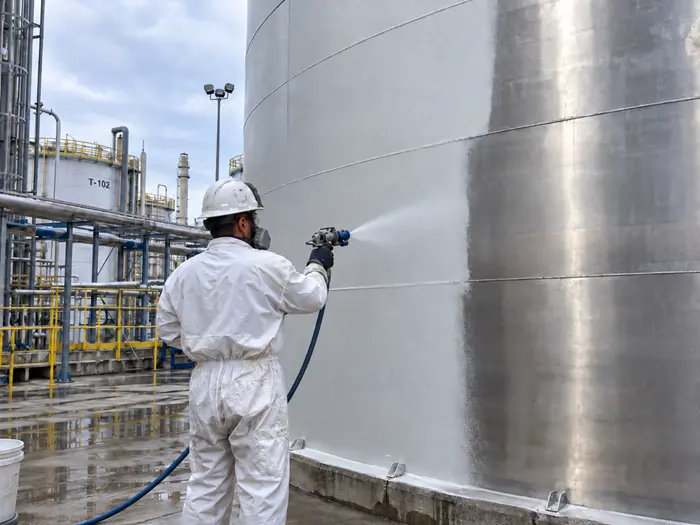
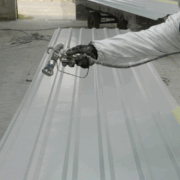
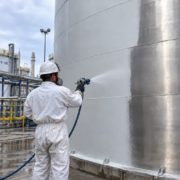
Spray application of thermal insulation coating Aes Techon an industrial metal storage tank

Spray application of the thin-layer thermal insulation coating Aes Tech on the metal surface of an industrial storage tank.

Why Thermal Insulation of Industrial Tanks Requires a Specific Approach

A storage tank is not simply a large metal surface to be insulated. The temperature of the contained product, external weather conditions, solar exposure, humidity, thermal cycles, and maintenance requirements make every intervention unique.

Therefore, thermal insulation of industrial tanks must be evaluated by simultaneously considering heat loss or heat gain containment, surface protection, and subsequent inspection needs.

In tanks containing hot products, limiting outward heat flux helps maintain a more stable process temperature. Conversely, in tanks containing cold products, the goal is often to restrict heat entry from the surrounding environment and control the conditions that favor condensation formation.

Savenergy.it’s thin-film nanotechnological insulation solutions are applied to liquid tanks, return tanks, boilers, condensate lines, heat exchangers, and storage silos.

Heat Loss: It Is Not Just About Thickness

When a temperature difference exists between the tank’s contents and the outside environment, heat transfer inevitably occurs.

On large structures, even a relatively low heat loss per square meter can become significant when considering the total surface area of the tank.

For this reason, insulation evaluation should not stop at material thickness alone. System thermal characteristics, operating temperatures, solar radiation, metal substrates, exposure conditions, and coating continuity must also be taken into account.

Savenergy.it industrial solutions utilize coatings containing hollow ceramic microspheres and are designed to achieve thermal protection with very low thicknesses. AES Tech, for example, has an application thickness of approximately 1–4 mm.

The advantage of a low thickness becomes particularly compelling in complex areas: joints, supports, welds, connections, and irregularly shaped surfaces.

Condensation on Tanks: When Does It Form?

A second critical issue is condensation.

When the temperature of a metal surface drops below the dew point of the surrounding air, water vapor can condense on the surface.

In an industrial facility, this condition must not be overlooked. The prolonged presence of moisture near the metal creates favorable conditions for corrosive phenomena.

The issue escalates when water penetrates underneath an insulation system and remains trapped between the insulation and the metal surface.

Corrosion Under Insulation: The Problem of CUI

This is where Corrosion Under Insulation—commonly referred to by the acronym CUI—comes into play.

CUI is the corrosion that develops on metal surfaces beneath an insulation system. It is particularly insidious because the degradation may not be immediately visible from the outside.

AMPP emphasizes that moisture, insulation condition, protective coatings, thermal cycles, and outer jacket integrity are all key factors to consider when managing CUI risk.

The topic is significant enough to be addressed by API Recommended Practice 583 – Corrosion Under Insulation and Fireproofing, which reached its third edition in 2026. This Recommended Practice covers design, maintenance, inspection, and CUI mitigation, and explicitly includes storage tanks among the affected equipment.
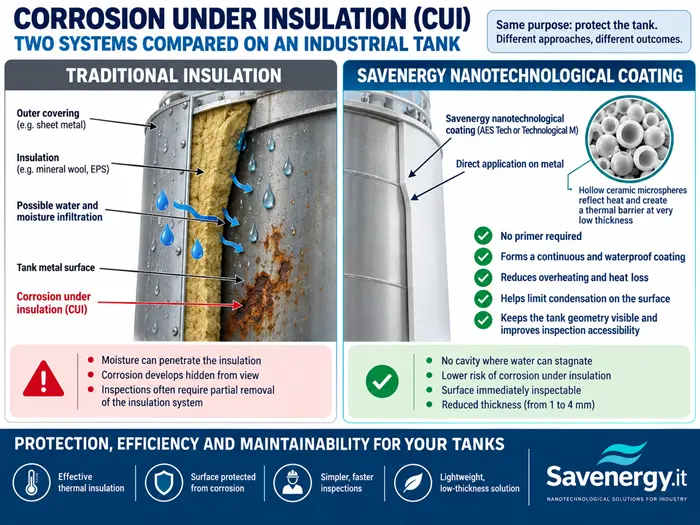
Corrosion under insulation (CUI): comparison between traditional insulation and Savenergy.it nanotechnological coating on an industrial tank

Comparison between traditional tank insulation and a Savenergy.it nanotechnological coating applied directly to the metal surface, highlighting differences related to moisture, CUI and inspection accessibility.

Traditional Insulation Systems and Corrosion Risks

Traditional insulation systems can promote corrosion, as water and contaminants frequently manage to penetrate the system and reach the underlying metal.

Industrial Tank Thermal Insulation and Inspection Accessibility

This aspect is sometimes overlooked when choosing an insulation system. An industrial tank must remain accessible for inspection and ongoing maintenance.
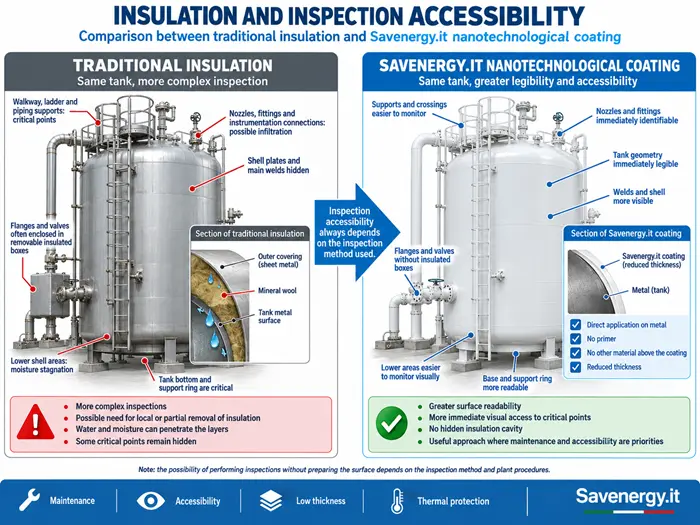
Comparison between traditional insulation and Savenergy.it nanotechnological coating for inspection accessibility on an industrial tank

Technical comparison between traditional insulation and Savenergy.it nanotechnological coating, highlighting inspection accessibility on industrial tanks and critical components.

Traditional insulation systems can comprise multiple elements—insulating material, fasteners, moisture barriers, and external cladding—and, depending on the required inspection type, localized opening or removal may be necessary to reach the underlying metal surface.

A thermal insulation coating applied directly to the substrate transforms this scenario: it creates no hidden cavity between the insulation panel and the sheet metal, leaving the tank’s geometry immediately visible from the outside.

This provides a significant advantage for maintenance programs.

However, this does not mean that every inspection can be carried out without affecting the coating. The ability to perform non-destructive testing (NDT) through a coating depends on the specific inspection technique, material, thickness, and plant procedures. API RP 583 itself pays close attention to the capabilities and limitations of various non-destructive examination methods.

For this reason, inspection accessibility must be addressed during the design phase, not just when maintenance is due.

Nanotechnological Coatings for Thermal insulation of Industrial Tanks

In the field of industrial tank thermal insulation, thin-film technologies are particularly useful when combining insulation performance, seamless continuity, and geometric simplicity.

AES Tech by Savenergy.it is a water-based coating containing hollow ceramic microspheres. Designed for thin-film application, it is specifically intended for industrial tanks and silos.

AES TECH Key Technical Data:

  • Thickness: Approx. 1.0 – 5.0 mm

  • Thermal Conductivity: λd = (HotBox Test) 0.0010 W/mK

  • Solar Reflectance (SR %) (ASTM C1549): 84.3

  • Thermal Emissivity (IE %) (EN 15976): 87.4

  • Solar Reflectance Index (SRI %) (ASTM E1980): 105

  • VOC Content: < 0.003 μg/L (UNI EN ISO 16000-9:2024, 16000-6:2021, 16000-3:2022)

  • Reaction to Fire: Euroclass A

  • Pull-off Test: >2 on substrate; 0.55 ± 0.10 N/mm² layer-to-layer (ASTM D4541)

  • Maximum Operating Temperature: 240 °C

Technological M Key Technical Data:

  • Thickness: Approx. 0.6 – 1.0 mm

  • Thermal Conductivity: λd = 0.001 W/mK

  • Solar Reflectance (SR %) (ASTM C1549): 88.1

  • Thermal Emissivity (IE %) (EN 15976): 85.8

  • Solar Reflectance Index (SRI %) (ASTM E1980): 111.1

  • Maximum Operating Temperature: 180 °C

  • Corrosion Protection: Class C4 (Class C5 by adding TopCoat and Primer Manti Anticorrosion) – ISO 12944

  • Water Permeability: Class W3, 0.0754 kg/(m²h⁰·⁵) (UNI EN 1062-3)

The Savenergy.it industrial line is applied primarily via Airless spray systems, allowing seamless application over curved surfaces, fittings, and complex shapes without requiring pre-formed panels.

For storage tanks, this is especially beneficial on large surface areas or structural details that are difficult to insulate with rigid systems.

Download Savenergy.it Product Technical Datasheets

Research on thermal-insulating coatings has investigated the use of hollow microspheres as functional fillers for reducing heat transfer on industrial equipment and piping, while also considering the corrosion performance of the coating system.

Does an Insulating Coating Eliminate CUI Risk?

Yes, an insulating coating such as AES Tech or Technological M significantly reduces CUI risk.

The key benefit of a coating bonded directly to the substrate is that it eliminates the conditions typical of conventional systems, where moisture can penetrate and remain trapped underneath the insulation layer.

However, proper engineering design must still account for the substrate material, surface condition, operating temperatures, ambient environment, and planned maintenance procedures.

How to Choose Thermal Insulation for an Industrial Tank

Before selecting a solution, it is essential to determine fluid temperature, operating thermal range, ambient temperature and humidity, solar exposure, tank material, surface condition, existing corrosion issues, and the thermal target of the project.

Based on this data, the most appropriate coating cycle can be specified and verified for the specific application.

This step converts insulation from a simple outer coating into an integrated component of the plant’s thermal efficiency, protection, and maintenance strategy.

Thermal insulation of Industrial Tanks – FAQs

Why thermally insulate an industrial tank?

Insulation reduces heat exchange between the stored product and the environment, helping stabilize operating temperatures and control surface temperatures.

Can insulation help control condensation?

A properly sized system modifies surface temperature and helps manage conditions that lead to condensation. However, verification must consider temperature, relative humidity, and dew point under actual operating conditions.

What is Corrosion Under Insulation (CUI)?

CUI is a corrosive phenomenon that develops on metal surfaces hidden beneath an insulation system, typically in the presence of trapped moisture. It is a major issue in the petrochemical, chemical, and process industries.

How thick should nanotechnological tank insulation be?

It depends on the specific product and project requirements. AES Tech is applied at 1–5 mm, while Technological M ranges from 0.6–2 mm. Required thickness must be calculated for each specific case.

Does a thin-film coating facilitate inspections?

While traditional multilayer systems with removable external jacketing make inspections difficult, thin-film coatings significantly improve accessibility.

A Customized Solution for Every Project

Selecting industrial tank insulation should not be based solely on heat loss reduction.

Heat loss, condensation, CUI risk, tank geometry, and future inspection accessibility must all be evaluated together.

Savenergy.it offers ultra-thin industrial nanotechnological insulation suitable for tanks, silos, piping, and metal equipment.

To determine the most suitable coating cycle for your facility or request technical information, contact us at info@savenergy.it or fill out the form

Eng. Elena Galeotti – 15/09/2026
Thermal Insulation on Metal: The Infrared Test on Maris Tech

Thermal Insulation on Metal: The Infrared Test on Maris Tech

Initial Summary

Thermal insulation on metal should be assessed not only according to the applied thickness, but also according to its ability to reduce heat transfer under conditions of intense radiation. For this reason, we carried out a demonstration test on an aluminium sample treated with approximately 1 mm of Maris Tech, exposed to an infrared lamp and analysed with a thermal imaging camera. The comparison between the non-insulated surface and the treated surface shows a clear thermal difference and helps explain the product’s behaviour on metal substrates.

By Eng. Elena Galeotti – 14/05/2026

Brief Contents

  • Why test insulation on metal
  • How the test was carried out
  • The results detected with the thermal imaging camera
  • Where Maris Tech can be used
  • FAQ

Why Test Thermal Insulation on Metal

Metal surfaces are widely used in the marine sector. However, metal has a very specific characteristic: it tends to transmit heat rapidly.

This means that a metal sheet exposed to an intense heat source can reach high temperatures in a short time, transferring heat towards the internal environment or to the opposite surface. In many applications, this phenomenon can create problems related to comfort, energy loss, condensation.

In these cases, a low-thickness thermal insulation coating for metal can represent an interesting solution, especially when traditional panels cannot be applied or when reduced overall dimensions must be maintained.

The Infrared Lamp Test on Aluminium

This technical test was carried out on an aluminium sample treated with approximately 1 mm of Maris Tech. One sample was exposed to an infrared lamp, used as a concentrated heat source, and the surface temperatures were measured using a thermal imaging camera.

The aim of the test was not to replace a certified laboratory test, but to visually and immediately show the behaviour of the coating when applied to a metal substrate subjected to intense radiation.

The test compared:

  • a non-insulated metal surface;
  • a metal surface treated with Technological M;
  • the behaviour of the sample by reversing the position of the heat source;
  • the temperature measured on the rear side of the substrate.

Results Detected with the Thermal Imaging Camera in the Test on Maris Tech Thermal Insulation for the marine industry

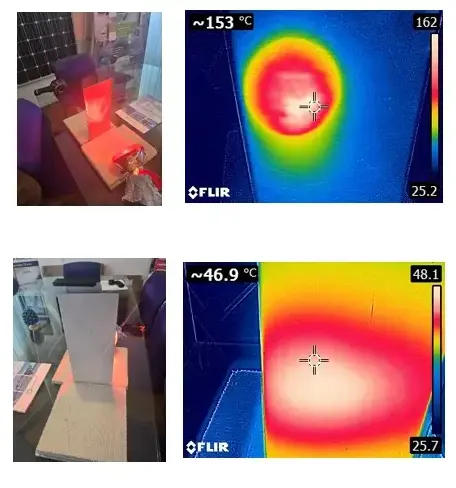
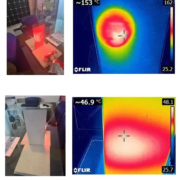
In the first scenario, the heated surface without insulation reached approximately 153°C. The part treated with approximately 1 mm of Maris Tech on the other hand, did not reach 47°C, showing a very significant reduction in the temperature measured on the opposite surface.

Maris Tech thermal insulation for metal tested with an infrared lamp and thermal imaging camera, first part of the test

The heated surface without insulation reaches 153°C, while the insulated area does not reach 47°C, reducing heat transfer by more than 100°C.

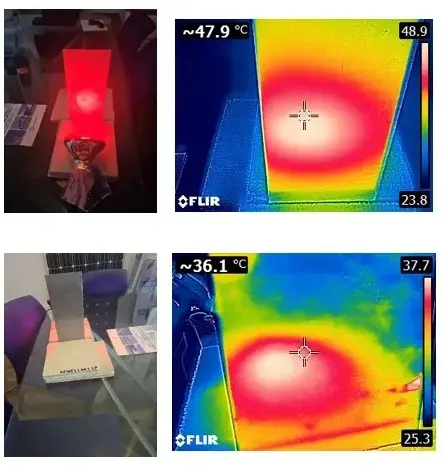
Maris Tech thermal insulation for metal tested with an infrared lamp and thermal imaging camera, second part of the test

Technological M thermal insulation coating tested on metal (aluminium) with an infrared lamp and thermal camera

By reversing the position of the heat source, the insulated area does not reach 48°C (compared with 153°C in the previous case), while the rear side drops to just over 36°C.

By reversing the position of the heat source, the insulated part did not reach 48°C, while the rear side dropped to just over 36°C.

These data, referring to the specific test carried out, show how the coating can help reduce thermal transfer through a metal surface. It is important to emphasise that the result may vary depending on several factors: type of substrate, applied thickness, application method, intensity of the heat source, exposure duration and environmental conditions.

For this reason, every industrial intervention should be assessed on a case-by-case basis, starting from the actual operating conditions.

Why Maris Tech Is Suitable for Metal Surfaces

Maris Techis a low-thickness nanocomposite liquid coating developed for thermal insulation and surface protection in the marine industry. Its formulation contains microscale vacuum ceramic microspheres and works mainly thanks to the thermo-reflective capacity of the coating.

Maris Tech can be applied on metals, concrete, wood, PVC, plastics, natural stones and sheet metal. The thickness is approximately 1.0–4.0 mm, with a coverage of about 1 litre per 1 m².

Other important technical data are:

  • Thermal conductivity: λd = 0,0010 W/mK
  • Thermal reflectance (SR %) (ASTM C1549): 91.0
  • Thermal emissivity (IE %) (EN 15976): 90.0
  • Thermal reflectance index (SRI %) (ASTM E1980): 115.3
  • Ph: 8,5 (± 0,5) VOC content: 1 gr/lt
  • Finish/color: White (can be colored with pastel colors)
  • Viscosity: 7500 cps Density: 370 kg/m3 approx.
  • Reaction to fire: Euro Class A – MED Certification
  • Water permeability w: 0.08 kg/m (E1062-3)
  • Pull-off test: > on substrate 0.55 ± 0.10 mmlyer over layer (ASTM 541) Drying time for each coat: 8 h

Maris Tech in MED – SOLAS – IMO – MSC certified for marine application (N° 0497/1809)

Importance of Correct Application of thermal insulation on metal

The performance of a technical coating always also depends on the quality of the application. Regarding the substrate, it must be clean, dry and properly prepared.

The application is possible in several coats, preferably using an airless sprayer, while respecting the drying times of each coat. </p&gt;

This aspect is fundamental: a good product must always be accompanied by a proper analysis of the substrate and by application carried out according to the technical instructions.

FAQ – Thermal Insulation on Metal

Is the infrared lamp test a certification?

No. It is an internal demonstration test, useful for visualising the thermal behaviour of the product on a metal sample. It does not replace certified laboratory tests or specific design assessments.

What thickness was applied to the sample?

In the test, approximately 1 mm of Maris Tech was applied. Generally speaking, Maris Tech has a thickness of 1,0-4,0 mm, depending on the theraml insulation level required.

Can Maris be applied directly onto metal?

Yes, it can be applied on metal surfaces, subject to verification of the substrate. Surface preparation is essential to ensure adhesion and coating durability.

Where can thermal insulation on metal be useful?

It can be assessed for cabins, internal hull walls, ceilings and suspended ceilings, engine rooms, technical rooms, cargo holds, areas with complex geometries, and surfaces exposed to temperature fluctuations and humidity (thermal bridges).

Conclusion

The infrared lamp test on aluminium immediately shows the behaviour of Maris Tech applied at low thickness on metal. The difference between the non-insulated surface and the treated surface highlights the potential of the coating in industrial contexts where heat control is a relevant technical issue.

To assess the use of Maris Tech on metal surfaces you can contact us for more information at info@savenergy.it.

📹 Follow our facebook for video, case history and much more!

Insulation for Industrial Buildings: how to improve comfort, protection and condensation control with AES TECH and Technological M

Insulation for Industrial Buildings: how to improve comfort, protection and condensation control with AES TECH and Technological M

What you will read: Insulation for industrial buildings is essential when the goal is not only to reduce heat gain and heat loss, but also to improve indoor comfort, limit condensation and protect goods, equipment and metal surfaces. In industrial sheds, warehouses, hangars and agricultural buildings, roofs and walls are often the most exposed elements. With AES TECH and Technological M, we can intervene with very low thicknesses, adapting the solution to roofs, walls and technical surfaces according to the specific needs of the building.

By Eng. Elena Galeotti

What you will find in this article

  • Why insulation for industrial buildings is now a strategic issue
  • The most common problems affecting roofs and walls
  • The main differences between AES TECH and Technological M
  • Typical application scenarios in industrial and agricultural buildings
  • Why low-thickness insulation can be a practical advantage
  • FAQ

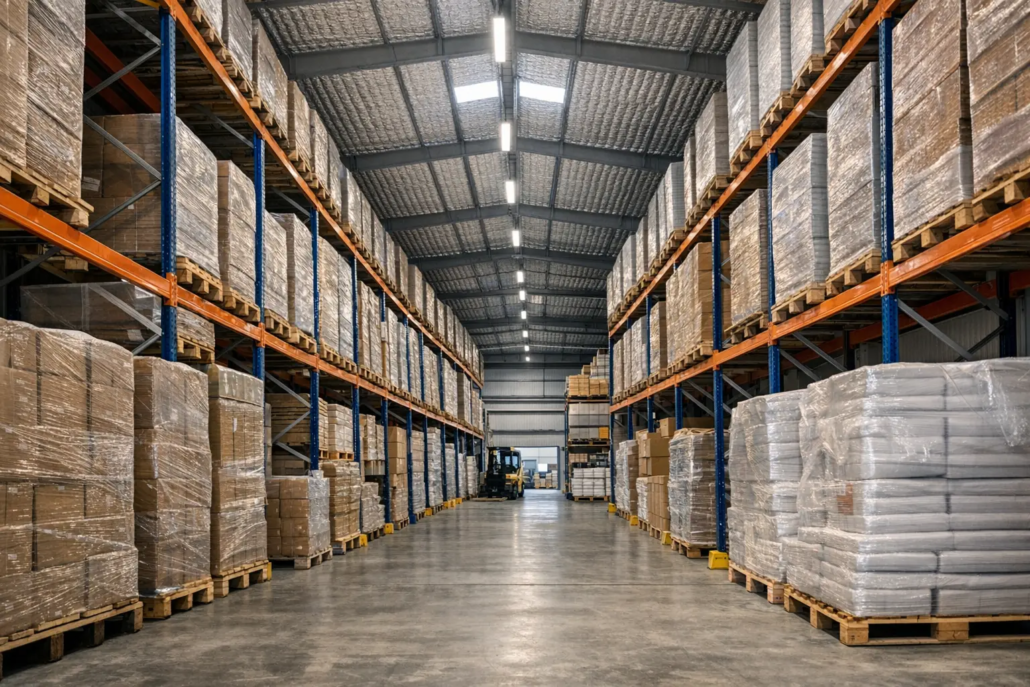
Industrial warehouse interior with high shelving and stored goods, example of insulation for industrial buildings

Why insulation for industrial buildings matters today

When we talk about insulation for industrial buildings, the discussion often focuses only on energy saving. In reality, the topic is much broader. In industrial, logistics and agricultural environments, an inefficient envelope can create overheating, cold internal surfaces, condensation and unstable indoor conditions.

This directly affects:

  • worker comfort
  • the preservation of goods and packaging
  • the durability of metal surfaces
  • the efficiency of storage and production areas
  • the continuity of operations

In industrial sheds, warehouses, hangars, livestock buildings and agricultural facilities, roofs and walls are continuously exposed to solar radiation, cold, humidity and sudden weather changes. That is why choosing the right solution for insulation for industrial buildings is not just a technical detail, but a practical decision that can affect the daily use of the building.

The most common problems in industrial roofs and walls

1. Overheating in summer

Metal roofs can absorb a high amount of solar radiation and transfer heat indoors. This can increase discomfort and put additional stress on cooling systems.

2. Cold surfaces and condensation

In winter or during seasonal transitions, poorly insulated walls and roofs can cool down quickly. This may create surface condensation, especially where indoor and outdoor temperatures differ significantly.

3. Damage to goods and technical components

Condensation and thermal fluctuations can affect:

  • paper and cardboard packaging
  • raw materials and semi-finished products
  • sensitive equipment
  • metal elements exposed to corrosion risks

4. Difficult interventions on existing buildings

Many industrial buildings require fast and low-impact solutions, especially when production or storage activities cannot stop for long.

Our approach to insulation for industrial buildings

At Savenergy, we work with nanotechnological thermal insulation systems designed for industrial applications where low thickness, versatility and practical installation are essential.

Our range includes:

  • AES TECH, with an application thickness of approximately 1 to 4 mm
  • Technological M, with an application thickness of approximately 0.6 to 2 mm

Both solutions are designed for very low-thickness applications, but they are not identical. Each product has strengths that make it more suitable in specific cases.

Technical overview: AES TECH

What it is

AES TECH is a nanotechnological thermal coating developed for industrial applications, especially on metal and technical surfaces.

Indicative application thickness

  • 1–4 mm

Best suited for

  • metal walls
  • tanks
  • pipes
  • technical surfaces
  • cold rooms
  • industrial equipment
  • critical internal points affected by thermal stress or condensation
  • can be applied also on concrete, cement, wood, PVC etc.

Main strengths

  • higher applicable thickness compared to Technological M
  • easy airless application
  • suitable for industrial metal surfaces
  • useful where stronger insulation contribution is required
  • low-thickness intervention on technically sensitive elements

When we usually recommend it for the Insulation for industrial buildings

We usually recommend AES TECH when the project focuses on metal walls, industrial components or localised areas where condensation, thermal fluctuation or heat transfer must be reduced without bulky build-ups.

Technical overview: Technological M

What it is

Technological M is a nanotechnological thermal and waterproofing coating particularly suitable for industrial and agricultural roofs and external surfaces.

Indicative application thickness

  • 0.6–2 mm

Best suited for

  • industrial roofs
  • agricultural roofs
  • external envelopes
  • mixed substrates
  • surfaces exposed to strong solar radiation

Applicable on

  • metals
  • concrete
  • cement
  • wood
  • PVC
  • plastics
  • other heterogeneous substrates

Main strengths

  • thermal protection combined with waterproofing effect
  • very versatile on different substrates
  • especially useful on roofs and exposed outer surfaces
  • low-thickness solution for large surfaces

When we usually recommend it for the Insulation for industrial buildings

We usually recommend Technological M when the main issue concerns the roof, the outer envelope, summer overheating, waterproofing needs or the treatment of surfaces exposed to weather and solar radiation.

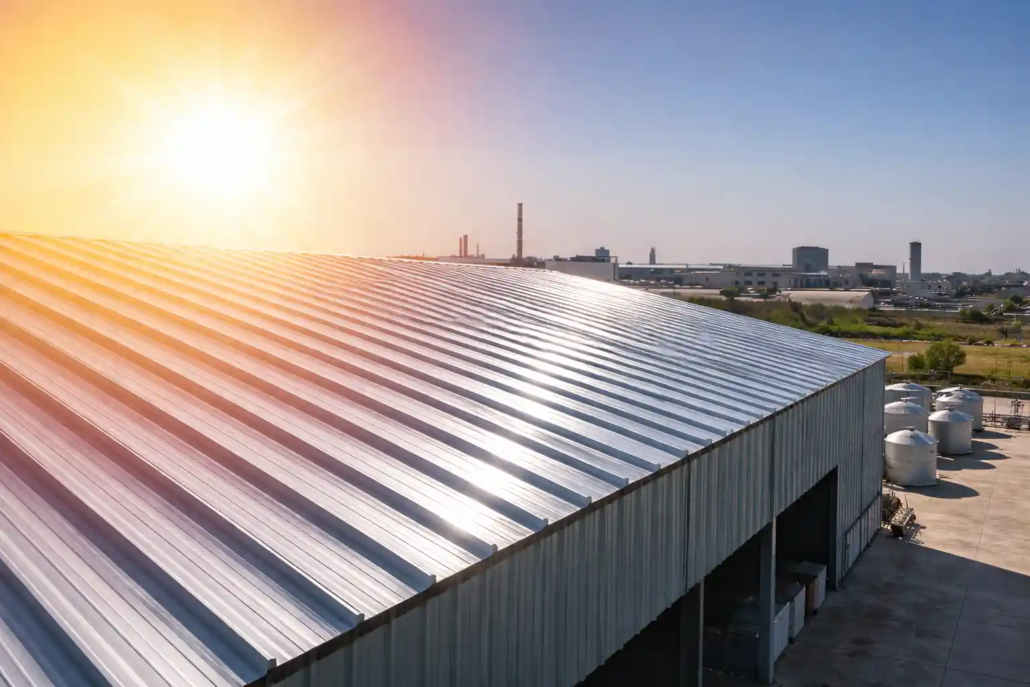
Sun-exposed metal roof of an industrial building, example of insulation for industrial buildings

AES TECH and Technological M: quick comparison

AES TECH

  • Thickness: 1–4 mm
  • Focus: metal and technical surfaces
  • Best for: walls, tanks, pipes, cold rooms, industrial elements
  • Key advantage: greater applicable thickness where higher insulation contribution is needed

Technological M

  • Thickness: 0.6–2 mm
  • Focus: roofs and outer surfaces
  • Best for: industrial sheds, agricultural buildings, external coverings
  • Key advantage: thermal protection plus waterproofing on exposed surfaces

Main application scenarios of the Insulation for industrial buildings

1. Industrial sheds with sun-exposed metal roofing

This is one of the most common cases. During summer, sheet-metal roofs can become a major source of indoor heat. In these situations, Technological M is particularly valuable because it works directly on the roof and also adds waterproofing protection.

2. Storage warehouses with sensitive goods

In warehouses, the issue is not only people’s comfort. Thermal peaks and condensation can damage packaging, components, raw materials and stored products. Here, insulation for industrial buildings becomes an operational necessity as well as a technical one.

3. Hangars and large-volume structures

In hangars or lightweight industrial buildings, very large internal volumes make indoor climate control more complex. If the roof overheats in summer or cools too quickly in winter, discomfort increases and HVAC systems work harder.

4. Livestock and agricultural buildings

In these environments, microclimate control is essential. Roof overheating may increase heat stress, while condensation can worsen indoor hygiene and environmental conditions. Technological M can be especially useful on roofs, while AES TECH can be considered for other critical metal elements.

5. Metal walls affected by condensation

When the main issue is a cold inner wall, AES TECH is often one of the most interesting options because it is particularly suitable for industrial metal surfaces and technical applications.

6. Mixed-substrate buildings

Not all industrial structures are uniform. Many include metal, wood, PVC or plastic components. In these cases, using low-thickness systems that adapt to different surfaces can be a major practical advantage.

7. Buildings that require fast, low-impact work

Where production cannot stop for long, airless spray application and reduced thickness can make the intervention more manageable and less invasive than traditional high-thickness systems.

A key advantage: low thickness and practical flexibility for the Insulation for industrial buildings

One of the most interesting aspects of our solutions is the balance between insulation performance and limited thickness.

This can be particularly useful when:

  • the structure should not be overloaded
  • internal volume must be preserved
  • the building is already in use
  • traditional insulation would be too invasive
  • the intervention must adapt to complex surfaces

For industrial projects, low thickness is not only a technical value. It is often a practical advantage that can simplify the whole intervention.

How we choose between AES TECH and Technological M for the Insulation for industrial buildings

In general, we tend to highlight:

  • Technological M when the main issue concerns the roof, the external envelope or waterproofing needs
  • AES TECH when the intervention focuses on metal walls, technical surfaces, industrial equipment or areas where a greater thickness is needed

In many cases, the right approach is not to think in abstract terms about one product only, but to assess:

  • the type of roof
  • the type of wall
  • the substrate
  • the intended use of the building
  • the main thermal and condensation-related critical points

Conclusions

Insulation for industrial buildings is no longer just a matter of reducing energy consumption. It is a decision that affects comfort, condensation control, protection of goods, surface durability and the day-to-day functionality of industrial and logistics spaces.

Industrial sheds, warehouses, hangars, depots and agricultural buildings all have different needs, but one principle remains the same: roofs and walls must be treated with solutions that fit the real materials, the real loads and the real critical issues of the building.

With AES TECH and Technological M, we can address these needs through a low-thickness, flexible and technically focused approach.

For more information or to evaluate the most suitable solution for your project, contact us at info@savenergy.it.

📹 Follow our facebook for video, case history and much more!

FAQ about Insulation for industrial buildings

Can AES TECH and Technological M both be used for insulation for industrial buildings?

Yes. Both are suitable for industrial applications, but with different areas of focus. Technological M is especially interesting for roofs and external surfaces, while AES TECH is particularly suitable for metal walls, technical surfaces and industrial elements that require greater thickness. Furthermore, the two products can also be used in combination, for example by insulating a roof with 2 mm of AES TECH plus 1 mm of Technological M.

Do these products help reduce condensation?

Yes. By improving the thermal behaviour of roofs and walls, they can help reduce cold spots and limit the conditions that favour surface condensation.

Is Technological M suitable for agricultural and livestock buildings?

Yes. It can be especially useful on roofs in agricultural and livestock buildings, where reducing heat load and controlling moisture-related issues is important.

Why choose a low-thickness insulation solution in industry?

Because it allows intervention without large build-ups, without significantly reducing usable space and with faster, more practical application even on existing buildings.

Insulation and Waterproofing of Warehouse Roofs with a Single Product: Technological M

Technological M: Thermal insulation and waterproofing for warehouse roofs in one solution

What This Article Covers

Thermal insulation and waterproofing of warehouse roofs can now be achieved with a single nanotechnological product. Technological M improves the thermal efficiency of industrial roofs while providing continuous, durable protection against water and atmospheric agents.

Contents Index

  • Critical issues of industrial roofs
  • Why integrate thermal insulation and waterproofing
  • What is Technological M
  • Insulation waterproofing warehouse roofs: the dual benefit
  • Technical advantages for professionals
  • Surfaces and application contexts
  • Conclusions and call to action

Critical Issues of Industrial Warehouse Roofs

Industrial warehouse roofs are constantly exposed to solar radiation, temperature fluctuations, rain, humidity and atmospheric pollutants. These conditions cause summer overheating, energy losses and premature surface degradation, leading to high maintenance and operating costs.

In this context, insulation waterproofing warehouse roofs becomes a strategic requirement to improve indoor comfort, reduce energy consumption and extend roof lifespan.

Why Integrate Thermal Insulation and Waterproofing

Traditional systems usually treat insulation and waterproofing as separate interventions, involving different materials, greater thicknesses and longer installation times. This increases construction complexity and multiplies critical points.

An integrated system allows:

  • continuous coating,
  • reduction of thermal bridges,
  • extremely low thickness,
  • higher long-term reliability,
  • fast application on existing roofs (spray application).

Technological M enables thermal insulation of industrial building roofs, at the same time,  allows surfaces to be waterproofed with a single product.

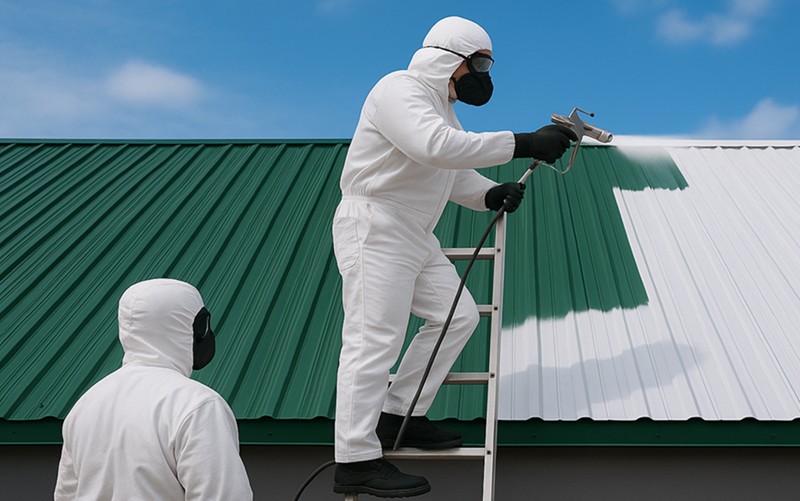
Thermal Insulation and Waterproofing of Warehouse Roofs with only one prodcut, the low-thickness microcoating Technological M

What Is Technological M, the product that allows Thermal Insulation and Waterproofing of Warehouse Roofs

Technological M is a water-based nanocomposite liquid thermal insulation and waterproofing coating. It is formulated with vacuum ceramic microspheres that act as a reflective thermal barrier and a continuous protective layer.

Applied by airless spray, it creates a uniform coating only a few millimeters thick, perfectly adhering to the substrate without adding structural load. It can be finished in different colors.

Thermal Insulation and Waterproofing of Warehouse Roofs: The Dual Benefit

The main advantage of Technological M is its ability to combine thermal insulation and warehouse roofs waterproofing in one solution.

From a thermal perspective, the coating significantly reduces incoming heat flow, limiting metal roof overheating and improving indoor temperature stability.
From a protective standpoint, the continuous layer prevents water infiltration, ponding and substrate degradation, preserving roof performance over time.

Technical Advantages for Professionals

For designers, contractors and facility managers, Technological M offers:

  • extremely low thickness and lightweight,
  • fast application without stopping production,
  • seamless coating without joints,
  • reduced energy and maintenance costs,
  • eco-friendly, fire-resistant and durable material.

These features make Technological M particularly suitable for industrial applications, where efficiency and downtime reduction are critical.

Surfaces and Application Contexts

Technological M is suitable for industrial and agricultural roofs made of:

  • metal sheets,
  • concrete,
  • fiber cement,
  • mixed or irregular surfaces.

It is ideal for both new constructions and energy retrofitting of existing warehouses.

Conclusions

Integrating thermal insulation and waterproofing into a single system is now an advanced technical choice. Thermal Insulation and warehouse roofs waterproofing with Technological M improves industrial and agricultural building performance through a fast, effective and long-lasting solution.

👉 For technical information or project evaluation, contact us at info@savenergy.it

Follow our facebook: Thermal micro-coating

Reduce energy consumption, protect your goods, and maximize interior space with high-performance, ultra-thin insulation coatings.

Thermal Insulation of Refrigerated Containers: the Nanotechnological Solution for an Efficient Cold Chain

Discover why the thermal insulation of refrigerated containers is a key factor in temperature-controlled logistics. We examine the limitations of traditional systems and present the benefits of cutting-edge nanotechnological coatings designed for high performance at minimal thickness.

📑 Contents

  • Why thermal insulation for refrigerated containers is essential
  • Weaknesses of traditional insulation systems
  • Features of advanced nanotechnological coatings
  • Operational and logistic benefits
  • Final thoughts and contact information

❄️ Why the thermal insulation of refrigerated containers is essential

In the transportation of food, pharmaceuticals, cosmetics, and sensitive goods, refrigerated containers must maintain consistent internal temperatures. Even with active refrigeration units, passive thermal insulation plays a critical role in:

  • Reducing energy consumption
  • Preventing thermal shock and external temperature fluctuations
  • Minimizing internal condensation
  • Extending autonomy during breakdowns
  • Protecting cargo and enhancing sustainability

⚠️ The limitations of traditional insulation for refrigerated containers

Conventional materials like polyurethane foam present several issues when used for thermal insulation refrigerated containers:

  • Bulky thickness that reduces usable interior volume
  • Limited effectiveness against radiant heat
  • Moisture absorption and potential for mold growth
  • Difficult application in retrofit projects
  • Fire safety and toxicity concerns

For these reasons, many companies are now switching to modern, high-performance alternatives.

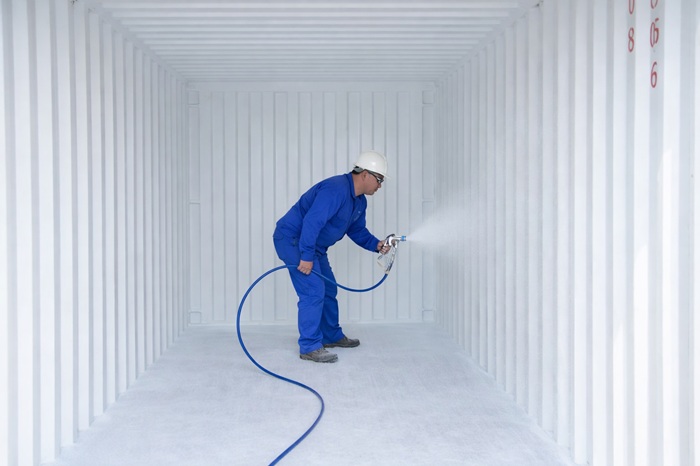
thermal insulation of refrigerated containers with low thickness AES TECH insulation, spray-applied

🚀 Advanced features of nanotechnological coatings for refrigerated containers

Latest-generation nanotech coatings, such as Technological M and AES Tech, offer an innovative approach to thermal insulation of refrigerated containers, thanks to their shared advanced characteristics:

  • Extremely high solar reflectance (SRI > 111): repels solar and infrared radiation
  • Ultra-low thermal conductivity (λ ≈ 0.0010 W/mK)
  • Minimal thickness: from 1 to 4 mm
  • Waterproof yet vapor permeable: prevents condensation and mold
  • Non-toxic, fireproof, eco-friendly, and low VOC
  • Spray-applied for easy and uniform coverage
  • Excellent adhesion to metal, plastic, PVC, concrete, and wood
  • Certified durability and minimal maintenance

These coatings are ideal for both new containers and retrofitted cold storage or temporary housing units.

📦 Concrete benefits for refrigerated container use

✅ Improved internal temperature stability
✅ Reduced strain on cooling units
✅ Energy savings and lower operational costs
✅ Easy and fast application, even in retrofit scenarios
✅ No loss of usable space
✅ Moisture and mold protection
✅ Long-lasting performance without degradation

Thermal insulation of refrigerated containers can now be achieved with just a few millimeters of spray-applied AES Tech.

📈 Ideal applications of thermal insualtion for refrigerated containers

Use Case Benefits
Refrigerated containers for food and pharma logistics Reliable cold chain maintenance
Containers converted into static cold rooms Quick retrofit, no structural work
Maritime and industrial environments Resistant to vibrations, humidity, and aggressive agents
Extreme climates High solar reflectance and stable thermal protection

✅ Conclusions

Thermal insulation of refrigerated containers is now a challenge that requires smart, high-performance technologies. With nanotechnological coatings at ultra-low thickness, you can achieve high-efficiency insulation that’s eco-friendly, space-saving, and easy to apply—without altering the structure or reducing the internal capacity of the container.

📩 Want to find the best solution for your refrigerated containers?
Contact us at: info@savenergy.it

For Technological M visit also https://www.manticeramicitalia.it/en/industry/

Food Sector Tanks: How to Ensure Effective and Safe Thermal Insulation

Food Sector Tanks: How to Ensure Effective and Safe Thermal Insulation Thermal insulation tanks in food sector: hygiene, efficiency, and long-term performance The thermal insulation of tanks in the food sector requires hygienic, efficient, and safe solutions. AES Tech and Technological M offer a durable, non-toxic, and ultra-thin alternative to traditional systems. 📌 What you’ll […]

Thermal Coating Industrial Buildings: Energy Efficiency Starts Here

Smart Insulation for the Modern Industry

In today’s industrial environment, a thermal coating industrial buildings solution is a strategic choice to improve energy efficiency, reduce HVAC costs, and extend the lifespan of structures. Industrial buildings, warehouses, and workshops are often exposed to extreme temperature changes that strain materials, equipment, and working conditions.

To meet these challenges, Savenergy.it offers two high-performance nanotechnology-based solutions: Technological M and AES TECH. These coatings are designed to provide ultra-thin insulation that is easy to apply, long-lasting, and compatible with complex or existing surfaces.

thermal insulation for industrial buildings

Why Choose a Nanotechnology-Based Thermal Coating for Industrial Buildings

A thermal coating industrial buildings system based on nanotechnology is a step forward compared to traditional insulation methods. Thanks to the use of vacuum ceramic microspheres, these coatings act as true thermal shields: they block up to 85% of incoming thermal radiation, drastically reducing summer overheating and winter heat loss.

With just a few millimeters of thickness, they deliver performance comparable to several centimeters of conventional insulation. In addition, the application is fast via Airless spray technology, maintenance is minimal, and the coating provides excellent resistance to moisture, weather, and UV exposure.

Thermal Coating Industrial Buildings: Real Benefits for Industry

Both Technological M and AES TECH are ideal for metal roofs, concrete surfaces, wood or plastic elements, prefab panels, and both exterior and interior walls. The coating perfectly adapts to irregular geometries and ensures:

  • Better indoor thermal comfort

  • Reduced condensation

  • Long-term material protection

  • Immediate energy savings

Thanks to these features, a thermal coating industrial buildings application also becomes a sustainability investment, delivering measurable benefits for both the environment and operational costs.

Want to Learn More?

Contact us to receive expert advice on choosing between Technological M and AES TECH, depending on your facility’s specific needs.

📩 Write to us at for more information: info@savenergy.it