Industrial Furnaces Insulation: Reducing Heat Loss and Radiant Heat from the Outside
Industrial Furnaces Insulation: Reducing Heat Loss and Radiant Heat from the Outside
Summary: Industrial furnaces insulation does not always require intervention on the internal refractory lining. When the external metal casing of a furnace reaches high temperatures and releases heat into the production area, an external thermal insulation treatment may be worth evaluating. AES Tech is an ultra-thin nanotechnology-based insulating coating that can be applied by spray in thicknesses of 1–4 mm. By measuring the actual temperature of the furnace casing before treatment, it is possible to assess whether external insulation can help reduce heat transfer, surface temperature and radiant heat without modifying the internal refractory system.
By Eng. Elena Galeotti – August 27, 2026
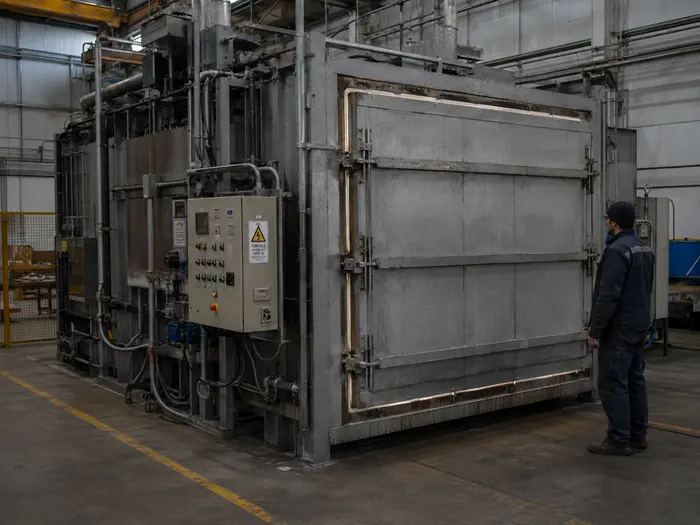
The external metal casing of an industrial furnace can be assessed to determine whether an external thermal insulation treatment may help reduce heat loss and radiant heat.
In This Article
- Where industrial furnaces lose heat
- Why radiant heat matters inside a production facility
- When external furnace insulation can be useful
- How AES Tech is applied
- Which types of furnaces can be evaluated
- Why external surface temperature is the key parameter
- A real AES Tech application</li>
- Savenergy.it pre-assessment protocol
- FAQ
Where Does an Industrial Furnace Lose Heat?
When industrial furnace efficiency is analysed, attention often focuses on burners, exhaust gases, heat recovery systems and process control.
However, heat can also be lost through the external furnace envelope.
Walls, doors, covers, ducts, joints and other external surfaces can transfer thermal energy to the surrounding environment through convection and radiation.
This means that a furnace can be operating correctly from a process point of view while still releasing a significant amount of heat through its external casing.
Large hot surfaces can contribute to the thermal load inside the production area even when their temperature appears relatively moderate compared with the internal process temperature.
This is one of the reasons why industrial furnace insulation should be assessed by looking not only at the internal temperature, but also at the actual temperature of the external surfaces.
Radiant Heat from Industrial Furnaces
Anyone standing close to a hot industrial furnace can often perceive heat without touching the equipment.
This is mainly due to radiant heat emitted by the external surface.
In facilities where several furnaces, drying ovens or other hot machines operate simultaneously, heat released by the equipment can contribute to:
- higher temperatures in the surrounding working areas;
- less favourable conditions for operators;
- more demanding maintenance activities;
- increased ventilation or cooling requirements;
- unnecessary energy transfer from the process to the building.
When technically possible, reducing the external surface temperature means acting directly on the source of radiant heat.
Instead of managing the heat after it has entered the working environment, the objective is to reduce the amount of heat transferred through the furnace envelope.
Industrial Furnaces Insulation from the Outaside
Many industrial furnaces already contain refractory materials and internal insulation specifically designed for their operating conditions.
For this reason, external insulation should not be considered an automatic replacement for the original refractory or thermal design.
However, improving an existing furnace from the inside may require:
- stopping the equipment;
- removing components;
- dismantling part of the refractory system;
- rebuilding the internal layers after the intervention.
In certain situations, it can therefore be useful to consider a different approach:
applying thermal insulation directly to the accessible external metal casing.&amp;lt;/strong></p>
External insu
lation for industrial furnaces can be particularly interesting when the internal refractory system should not be modified or when conventional external insulation systems would create excessive thickness.
AES Tech: Industrial Thermal Insulation in 1–4 mm
<p>AES Tech is a nanotechnology-based thermal insulation coating developed for industrial applications.
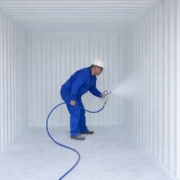
It is applied in indicative thicknesses of 1 to 4 mm and is primarily installed using an Airless spray system.
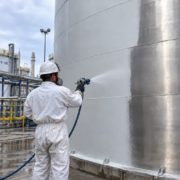
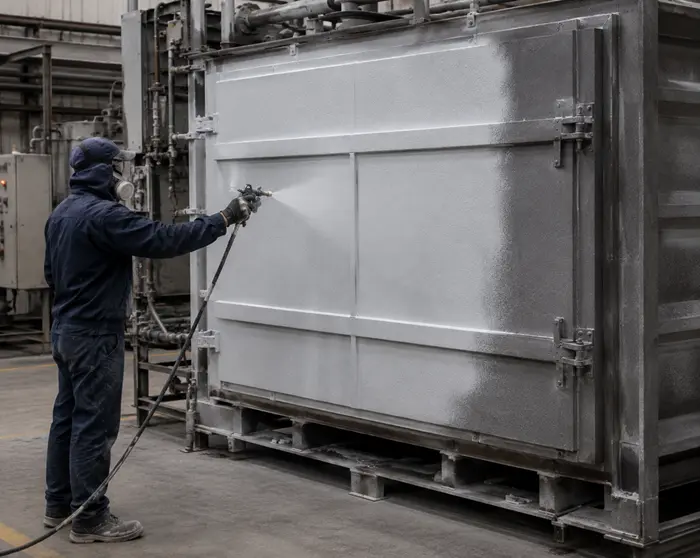
Spray application of AES Tech on the external metal casing of an industrial furnace, creating an ultra-thin continuous thermal insulation layer.
Roller or brush application can also be considered for small or difficult-to-access areas.
The extremely low thickness can be particularly useful on industrial equipment where conventional insulation panels, blankets or jackets may:
- require additional space;
- interfere with access;
- be difficult to install around complex geometries;
- require additional containment structures.
AES Tech follows the geometry of the substrate and can therefore be applied to metal surfaces, curves, joints, doors and irregular areas.
AES Tech is suitable for applications up to 240 °C.
However, the actual suitability of the system must always be evaluated according to the temperature of the surface to be treated and the real operating conditions.
Which Industrial Furnaces Can Be Evaluated for external insulation?
External thermal furnaces insulation can be considered for equipment with a hot, accessible metal casing.
Potential applications include:
- drying ovens;
- paint curing ovens;
- industrial dryers;
- hot chambers;
- furnaces for resins and composites;
- preheating equipment;
- low- and medium-temperature process systems;
- other industrial machinery with hot external surfaces.
The type of furnace alone, however, does not determine whether the intervention is suitable.
The most important parameter is often something much simpler: the actual temperature of the external metal surface during normal operation.
Internal Temperature Is Not Enough
To design a correct thermal furnaces insulation the internal temparature in not enough.
Two industrial furnaces operating at the same internal process temperature can have completely different external surface temperatures.
Why?
Because the temperature of the external casing depends on several factors:
- furnace construction;
- refractory stratigraphy;
- condition of the existing insulation;
- thermal bridges;
- doors and joints;
- equipment geometry;
- operating cycle.
For this reason, knowing only that a furnace operates, for example, at a certain internal temperature is not sufficient to design an external furnaces insulation intervention.
The surface temperature of the casing must be measured directly.
This is one of the most important preliminary steps in evaluating industrial furnace insulation.
Before Insulating a Furnace: Measure the Surface Temperature
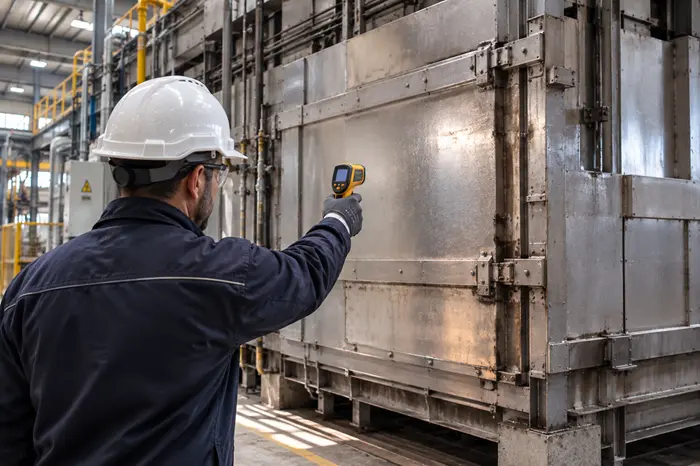
Measuring the external surface temperature is a key step in assessing heat loss and determining whether industrial furnace insulation should be applied.
A technically sound assessment should begin with an inspection and a few essential measurements.
The most useful information includes:
- internal process temperature;
- external surface temperature;
- ambient temperature;
- dimensions of the hot surfaces;
- annual operating hours;
- substrate material and condition;
- presence of particularly hot areas;
- space and accessibility constraints.
Infrared temperature measurements can provide an initial indication of surface conditions.
Thermal imaging can also be useful for identifying areas such as:
- doors;
- joints;
- edges;
- panels;
- connections;
- thermal bridges.
These areas may operate at temperatures higher than the surrounding casing.
The objective is to establish a measurable situation before the treatment of thermal furnaces insualtion, so that any change in surface temperature can also be verified afterwards.
Why External Application Can Simplify the Intervention
Accessibility is an important consideration for maintenance managers.
A thin coating applied directly to the metal casing follows the shape of the equipment without requiring the volume associated with many conventional insulation systems.
This can be useful around:
- doors;
- curves;
- fittings;
- joints;
- narrow passages;
- irregular surfaces.
When the specific operating conditions permit it, an external treatment can also avoid modifications to the internal refractory system.
This does not automatically mean that the furnace can always remain in operation during application.
Surface preparation, application temperature, site safety and the condition of the equipment must be assessed for each project.
Real Case: Surface Temperature Reduced from 80 °C to 31 °C
A real AES Tech application provides a useful example of why surface temperature measurements are essential.
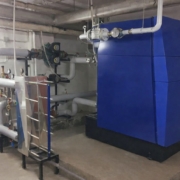
In a heating plant, AES Tech was applied to industrial pipework at a thickness of approximately 3 mm.
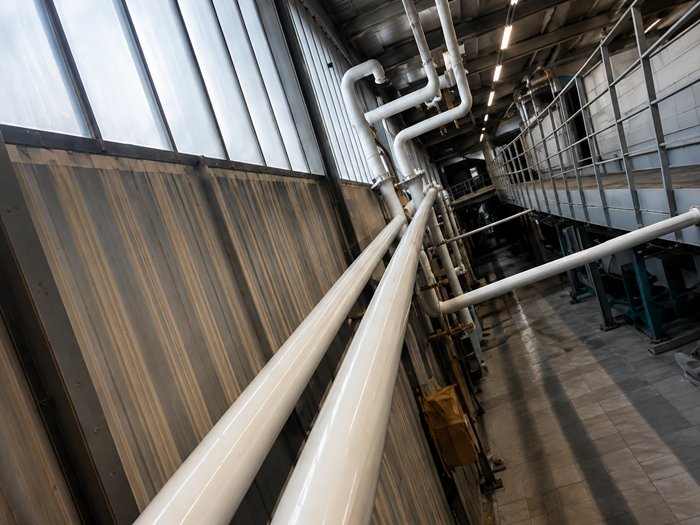
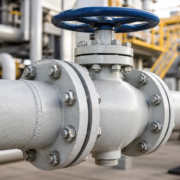
Industrial pipework treated with approximately 3 mm of AES Tech in a real application where the measured surface temperature decreased from about 80°C to about 31°C.
The measured surface temperature was:
Before application: approximately 80 °C
After application: approximately 31 °C
This result refers to a specific application on industrial pipework.
It should not be interpreted as a performance guarantee for an industrial furnace.
The final temperature obtained after treatment depends on several variables, including:
- initial surface temperature;
- substrate material;
- geometry;
- applied thickness;
- ambient conditions;
- operating conditions.
The case study nevertheless demonstrates an important methodological point.
When evaluating industrial furnace insulation, performance should be assessed using the real temperatures of the equipment before and after the intervention rather than relying only on generic theoretical assumptions.
Savenergy.it Pre-Assessment Protocol
What Information Do We Need to Evaluate an Industrial Furnaces insulation?
Before proposing an AES Tech intervention, Savenergy.it analyses the real operating conditions of the equipment.
The preliminary information normally includes:
- internal process temperature;
- external casing temperature during normal operation
- ambient temperature;
- substrate material;
- condition of the external surface;
- approximate dimensions of the hot areas;
- operating hours;
- doors, joints, edges or other hotter areas;
- space restrictions;
- accessibility constraints;
- photographs of the equipment.
The internal furnace temperature alone is not sufficient.
Two furnaces operating under similar process conditions can have very different external surface temperatures and may therefore require different technical evaluations.
Industrial Furnaces Insulation Should Start from Real Data
The objective is not simply to “insulate a furnace”.
For a plant manager or maintenance engineer, the real questions are:
How much heat is being transferred through the external casing?
Which areas have the highest surface temperatures?
Can these temperatures be reduced without modifying the internal refractory lining?
Would a few millimetres of external insulation solve a space or accessibility problem?
These questions make the assessment much more useful than simply choosing an insulation material based on its nominal properties.
External insulation with AES Tech can be particularly interesting when:
-
- the metal casing is hot;
- the surface is accessible;
- available space is limited;
- conventional insulation systems are difficult to install;
- modifying the internal refractory system would be invasive.
Every industrial furnace is nevertheless different.
A technical assessment of temperatures, geometry, substrate and operating conditions is therefore necessary before defining the intervention and the appropriate thickness.
FAQ – Industrial Furnace
s Insulation
What Is External Industrial Furnaces Insulation?
External industrial furnaces insulation consists of applying an insulating system to the accessible outer surface of the furnace rather than modifying its internal refractory layers.
With AES Tech, the treatment consists of an ultra-thin insulating coating applied directly to the external metal casing.
Is It Necessary to Remove the Internal Refractory Lining
Not necessarily.
If the intervention is designed for the external casing, its purpose is precisely to work from the outside without directly modifying the refractory lining.
The feasibility of this approach must nevertheless be verified for the specific furnace.
Can External Insulation Reduce Radiant Heat?
Reducing the temperature of the treated external surface can also reduce the radiant heat emitted by that surface.
The actual result depends on factors such as initial temperature, substrate, coating thickness, geometry and operating conditions.
For this reason, surface temperatures should be measured before and after treatment.
How Thick Is AES Tech?
AES Tech is used for industrial thermal insulation in thicknesses of approximately 1–4 mm, depending on the application and the thermal objective.
Can AES Tech Be Applied to an Existing Furnace?
Yes.
Existing industrial machinery and metal structures are among the applications that can be evaluated for AES Tech.
Before application, the condition of the substrate, surface temperature, required preparation and operating conditions must be checked.
What Is the Maximum Application Temperature for AES Tech?
AES Tech is suitable for applications up to 240 °C.
The relevant parameter when assessing an existing furnace is the temperature of the external surface to be treated, not simply the internal process temperature.
How Is AES Tech Applied?
AES Tech is primarily applied using an Airless spray system.
Spray application allows the coating to follow complex geometries, joints, curves and irregular metal surfaces while maintaining very low thickness.
Roller or brush application can also be used on limited areas when appropriate.
Can AES Tech Be Applied Without Stopping the Furnace?
This must be evaluated case by case.
The possibility of working while the equipment is operating depends on:
- actual surface temperature;
- required surface preparation;
- application conditions;
- accessibility;
- site safety requirements.
External application can potentially reduce the need for invasive work on the internal refractory system, but operating conditions must always be technically assessed.
Would You Like to Evaluate Heat Loss and Thermal insulation for Your Industrial Furnace?
If your plant includes furnaces, dryers or other industrial machinery with hot external surfaces, a preliminary technical assessment can start from a few simple data points.
Send us:
- photographs of the equipment;
- internal process temperature;
- measured external surface temperature;
- approximate dimensions of the hot areas;
- information on operating conditions.
Savenergy.it can evaluate whether AES Tech is suitable for the application and identify the areas where external insulation may be most useful.
For further information, contact info@savenergy.it.
or fill in the form https://www.savenergy.it/en/contact/
 Follow us on Facebook to discover our full range or products for industrial thermal insulation.