
Flange insulation: low-thickness nanotechnology coating for critical plant points
Initial summary
Flange insulation is one of the most delicate aspects of thermal management in industrial piping. Flanges are connection, fastening and inspection points: they need thermal protection, but they must also remain accessible for inspections, maintenance and possible disassembly. For this reason, in many plants, the use of low-thickness nanotechnology coatings can be an interesting technical solution, especially when traditional insulation systems are too bulky or impractical on joint areas.
Quick index
- Why flanges are critical points
- The problem with traditional flange insulation
- How a nanotechnology coating can help
- AES TECH Savenergy for flange insulation
- What to assess before application
- Technical limits and maintenance
- FAQ
Why flanges are critical points
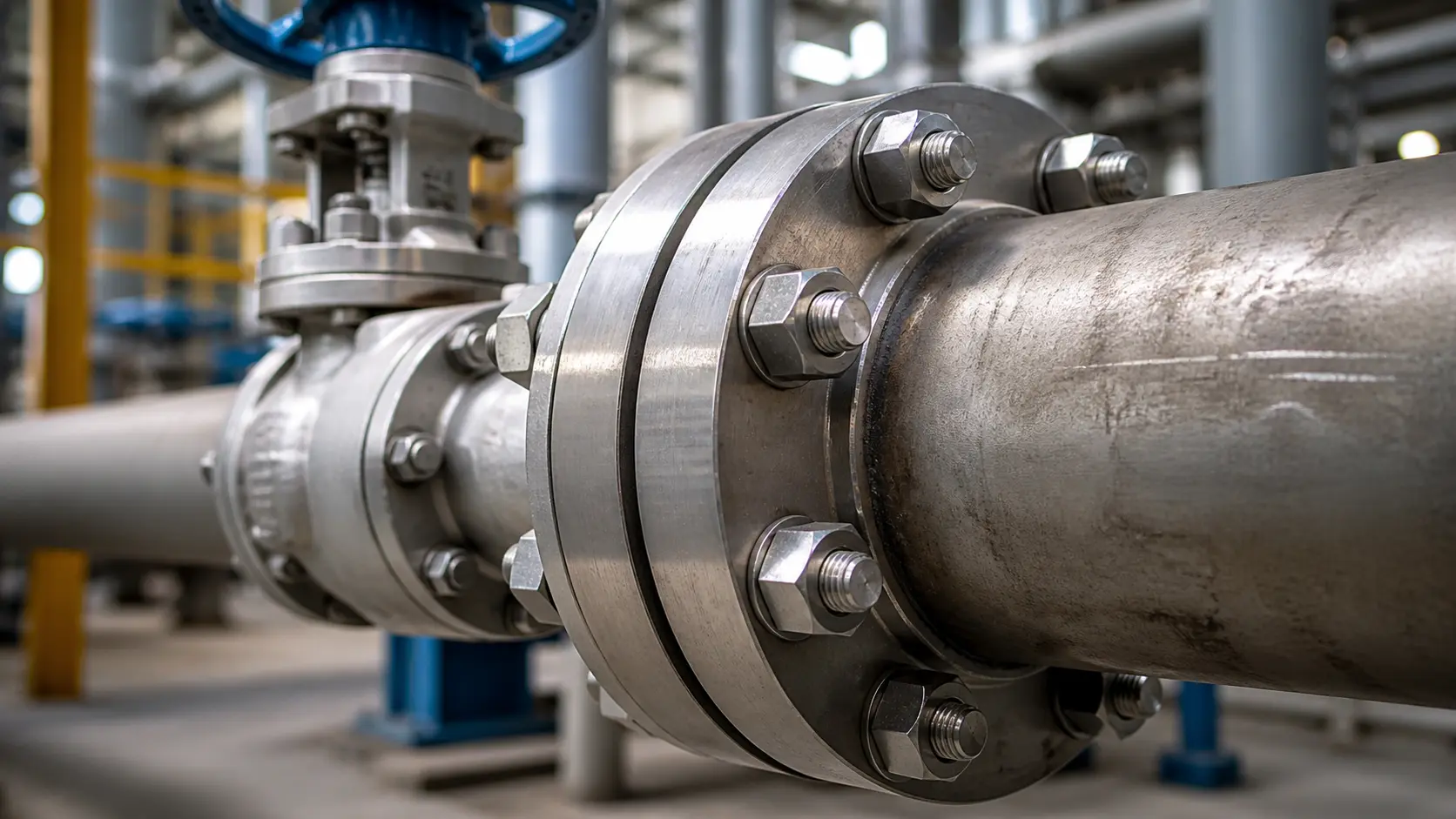
Industrial pipe flange with valve: a critical point where low-thickness flange insulation Aes Tech can help reduce bulk and maintain accessibility for maintenance.
Flanges are not just accessory elements of a pipe. They are joint points that allow the connection between pipe sections, valves, equipment and plant components. Precisely because of this function, they must remain inspectable over time.
A straight section of pipe can be insulated with greater continuity. A flange, on the other hand, includes bolts, geometric discontinuities, different thicknesses, possible tightening areas and surfaces that may need to be inspected. Flange insulation therefore requires a different approach compared to the insulation of the main pipeline.
The issue is not only thermal. It is also operational: insulation that is too bulky can make it more difficult to reach the bolts, check the joint area or intervene quickly during maintenance.
The limitation of bulky insulation systems
In industrial applications, flanges are often insulated with removable systems, insulation jackets, shaped pipe sections or tailor-made solutions. These systems can be effective, but they are not always practical when space is limited, flanges are numerous or the plant requires frequent checks.
In some cases, the insulation material must be removed and repositioned several times. In others, the geometry of the flange makes it difficult to obtain a continuous and tidy closure. In addition, every discontinuity can become a weak point: an uncovered area, a thermal bridge, a dirt accumulation zone or an area that is more complex to manage during inspections.
For this reason, low-thickness flange insulation can be useful when the goal is to reduce bulk and maintain thermal protection that follows the real shape of the component more closely.
How a nanotechnology coating works
A ceramic-matrix nanotechnology coating is applied in low thickness and follows the geometry of the surface. In the case of flanges, this means treating the component without creating excessive volume around the joint point.
The principle is not the same as that of a traditional high-thickness insulation system. The coating contributes to heat management through a combination of factors: reflectance, emissivity, reduction of heat flow and continuity of the applied film. This approach can be particularly interesting on complex metal surfaces, where space and accessibility are key design factors.
The main advantage is not “covering more”, but acting in a thinner and more continuous way. The flange remains visually more readable, the coating follows the shape of the part and the intervention can be designed according to the areas that must remain accessible.
AES TECH Savenergy for flange insulation
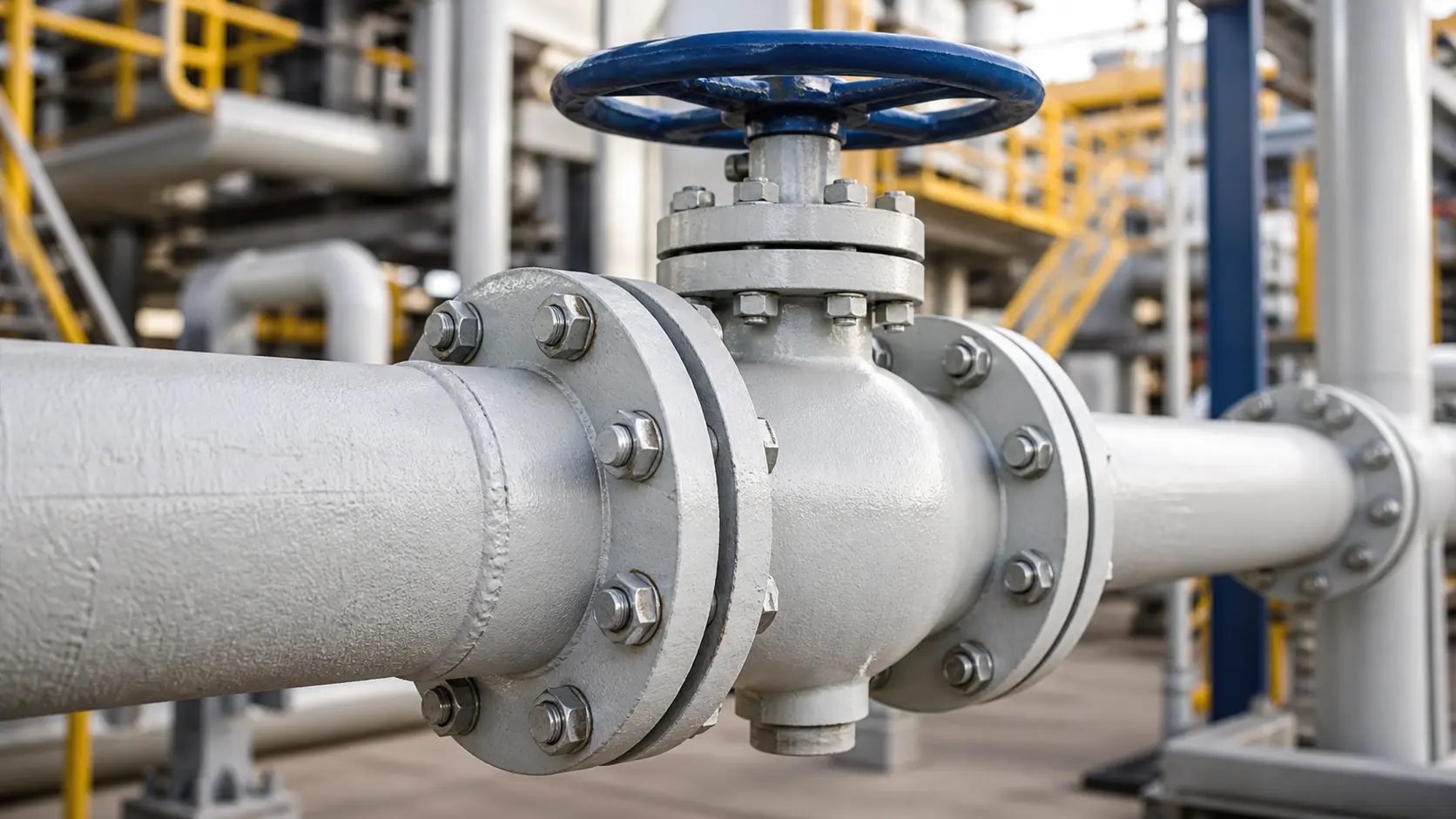
Industrial valve and flanges on a coated pipeline with Aes Tech: an example of flange insulation designed to reduce bulk and maintain access to bolts and joint areas
For industrial applications on metal components and complex geometries, Savenergy offers AES TECH, a semi-liquid nanocomposite insulation coating developed for technical surfaces. In the case of flange insulation, AES TECH can be evaluated when a low-thickness coating is required, applicable on properly prepared metal and compatible with the accessibility needs of the component.
AES TECH works with indicative thicknesses from 1.0 to 4.0 mm. The reference technical values include thermal reflectance of 84.3% according to ASTM C1549, thermal emissivity of 87.4% according to EN 15976 and SRI index of 105 according to ASTM E1980. These parameters are useful when designers or maintenance managers need to assess the behaviour of the coating on metal surfaces exposed to thermal load.
Application is carried out in several coats, with accurate substrate preparation and compliance with drying times. On a flange, this step is especially important: the presence of bolts, edges and coupling surfaces requires a preliminary assessment of the areas to be treated and of the parts that should remain free for inspection or disassembly.
What to assess before applying flange insulation
Before working on a flange, it is necessary to clarify the technical objective of the insulation. Not all flanges have the same requirements, and not all of them can be treated in the same way.
The main aspects to assess are:
- operating temperature of the line;
- flange position and real accessibility;
- inspection frequency;
- need for periodic disassembly;
- bolts that must remain accessible;
- metal condition and substrate preparation;
- any primer required by the application cycle;
- environmental conditions during installation;
- desired final thickness;
- compatibility with the plant’s maintenance procedures.
For AES TECH, the ideal application method is with a Graco Mark VII HD airless piston sprayer. Operating conditions require an application temperature not lower than +5 °C, humidity not higher than 80%, protection from rain for the first 48 hours and complete curing within 30 days.
Flange insulation and maintenance
Maintenance is a central issue. A flange must not be made inaccessible by insulation applied without a clear technical criterion. On the contrary, the intervention must be designed to keep the points that may require inspection readable and manageable.
In some cases, only certain surfaces of the flange may be coated. In others, it may be preferable to leave specific tightening areas free. The correct solution depends on the function of the flange, the temperature of the line and the plant’s internal procedures.
This is why flange insulation should not be treated as a simple standard application. It is a technical intervention on a critical point and must be carefully assessed before installation.
FAQ
Why are flanges difficult to insulate?
Because they are joint points with bolts, geometric discontinuities and possible inspection or disassembly needs. They cannot be treated like a simple straight section of pipe.
Can a nanotechnology coating reduce insulation bulk?
Yes. Low thickness is one of its main advantages. On a flange, it can help limit bulk compared to more voluminous systems, provided that the application is properly designed.
Can AES TECH be used for flange insulation?
AES TECH can be evaluated for metal components and complex geometries, including flanges and critical points of industrial piping. The choice depends on temperature, substrate, accessibility and maintenance requirements.
Do the bolts remain accessible?
In most cases, yes. It depends on how the intervention is designed. In many situations, it is advisable to define before application which areas should be treated and which should remain free for checks, tightening or disassembly.
Does the coating always replace insulation jackets or shaped sections?
It can be an alternative or complementary solution in specific cases. The choice depends on the plant requirements and the performance needed.
Is a preliminary test recommended?
On critical components, it is often advisable to evaluate a sample area or a first controlled application to check adhesion, workability and compatibility with maintenance needs.
Conclusion
Flange insulation requires a balance between thermal protection, accessibility and maintenance. Flanges are critical points in the plant and cannot be insulated without considering bolts, periodic checks and possible disassembly.
Savenergy nanotechnology coatings, and AES TECH in particular, can offer an interesting solution when low-thickness application is required on complex metal surfaces. The correct choice always starts from a technical assessment of the component, operating conditions and the plant’s maintenance requirements.
For more information or to request a technical evaluation for your plant, please contact us at info@manti-ceramic.com.
 Follow our facebook for video, case history and much more!
Date: May 4, 2026
Author: Eng. Elena Galeotti
